Paintability is a major design advantage in wainscot projects. Learn how it affects colour freedom, repair planning, style continuity and long-term interior updates.
Paintability turns a profile into a design system
When comparing a top wainscot brand, paintability deserves close attention. A profile may look simple in an unpainted sample, but once it is arranged into frames and finished with the wall, it becomes an architectural element. The ability to select the final colour helps the same collection work across many interior concepts.
Custom colours for every project
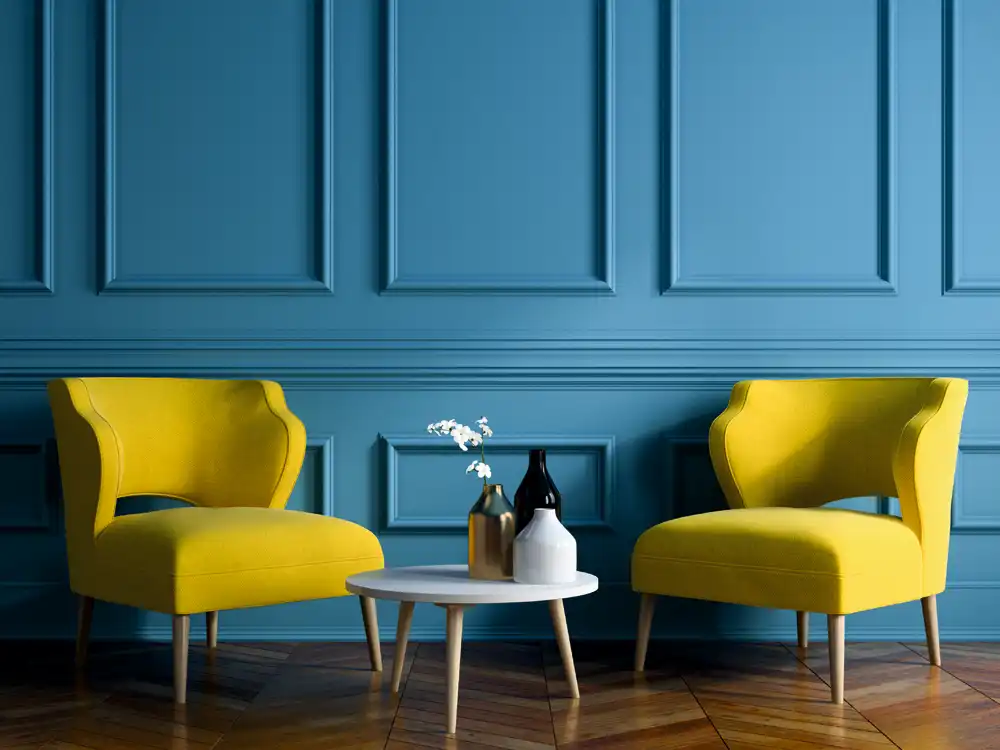
Residential clients may want a quiet off-white, a deep blue feature wall or a colour matched to upholstery. Commercial projects may need a tone linked to brand identity. Paintable mouldings allow the designer to coordinate the wainscot with walls, ceilings, doors and furniture instead of working around a limited factory-finish palette.
Mark Decor's official Paintable Wall Mouldings collection is presented under the wider Wall Mouldings category, making it relevant for colour-led wainscot compositions.
One-colour walls look more architectural
Painting the wall and moulding in the same shade allows light and shadow to reveal the profile. This treatment can make detailed mouldings feel contemporary. It also reduces visual interruption in smaller rooms because the wall reads as one surface.
Two-tone wainscot creates stronger zoning
Where a rail divides the lower and upper wall, two colours can emphasise the proportion. A darker lower section visually grounds the room; a lighter upper section can preserve openness. The exact colours should be tested with flooring and lighting.
Paintability supports future interior changes
Interiors evolve. Furniture changes, walls are refreshed and businesses update brand colours. A paintable composition can be included in a future repainting plan, subject to correct preparation and compatible coatings. This flexibility may be more practical than replacing an entire decorative wall treatment when only the colour scheme changes.
What to ask the brand or supplier
- Is the selected profile intended to receive paint?
- What surface preparation is recommended?
- Should a particular primer type be used?
- Are there limitations on the coating system or application location?
- How should joints and fixing points be finished?
- Can a sample be painted before the complete order is installed?
A top brand should provide clear product-level guidance rather than rely on a general statement that every finish will work in every condition.
Paint finish affects perceived quality
Even a well-made profile can look poor when wall preparation, joint finishing or paint application is rushed. Matt finishes are forgiving but produce softer highlights. Satin and low-sheen finishes show more edge definition. Gloss can be dramatic but demands a very smooth base. The installer and painter should coordinate their sequence before work starts.
Colour testing checklist
- Prepare a representative section with the actual moulding and wall substrate.
- Apply the intended primer and full paint system.
- View the sample in morning, afternoon and artificial light.
- Place flooring, upholstery and metal-finish samples nearby.
- Check whether the profile shadow is too strong or too subtle.
- Approve both colour and sheen before the full wall is finished.
Frequently asked questions
Does paintability mean the moulding arrives in the final colour?
No. Paintable products are intended to receive an appropriate coating; the final colour is normally selected and applied for the project.
Can dark colours be used on wainscot?
Yes. Dark colours can emphasise depth, but samples should be checked because sheen and lighting greatly affect the result.
Is one-colour or two-colour wainscot better?
Neither is universally better. One colour feels integrated; two colours create stronger visual separation.
Review colour-ready options in the Paintable collection and use the Mark Decor contact page for catalogue, dealer or project support.


