Liquid Metal Panel (LMQ)


Collections




Liquid Metal Panel (LMQ) Guide
Liquid Metal Panels for Decorative Interior Statements
A well-designed wall needs more than an attractive colour. Liquid Metal Panels by Mark Decor offer a family of decorative surface choices that add depth, controlled shine and tactile interest to contemporary interiors. The collection includes original Metalixo, Victor and Metalixo 2.0. Each family brings its own design language and documented construction, so this main category is intended to help architects, designers, dealers and homeowners understand the choices before they select an individual panel code. The term liquid metal describes the collection's decorative appearance; it does not mean every panel is cast from solid metal.
Use this category as a starting point for decorative metallic wall panels, architectural feature walls, fitted interiors and accent cladding. The right finish depends on material construction, pattern scale, wall height, colour temperature, joining details and the demands of the installation.
Three Collections, Three Different Material Stories
Original Metalixo is presented in its catalogue as a decorative laminate with liquid metal coating. Its 600 × 2400 mm sheets feature mineral, concrete, timber, rattan-like and metallic surface expressions. Victor is a separately catalogued crafted-panel collection with 600 × 2400 mm format and an emphasis on architectural texture. The Victor brochure does not identify the panel's substrate or thickness, so it should not be specified as the same material as original Metalixo.
Metalixo 2.0 takes a different approach: the current catalogue identifies high-impact polymer sheets sized 600 × 2900 mm, with thickness varying from 2 to 4 mm according to mould pattern. These differences are material to selection and installation.
What Makes a Metallic Decorative Surface Visually Effective?
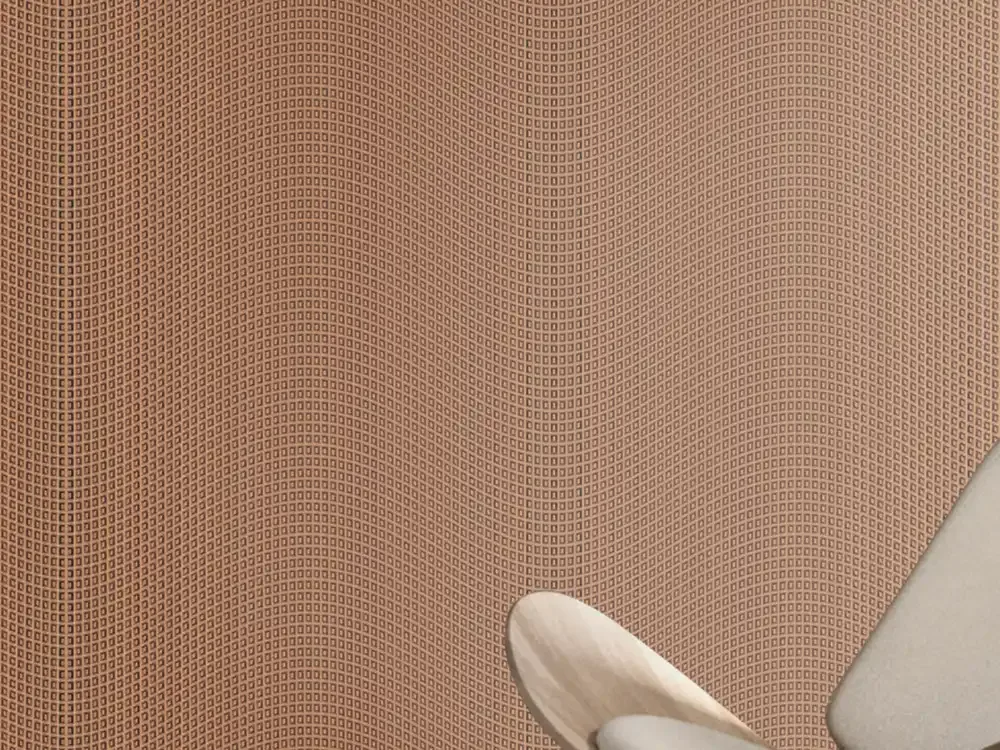
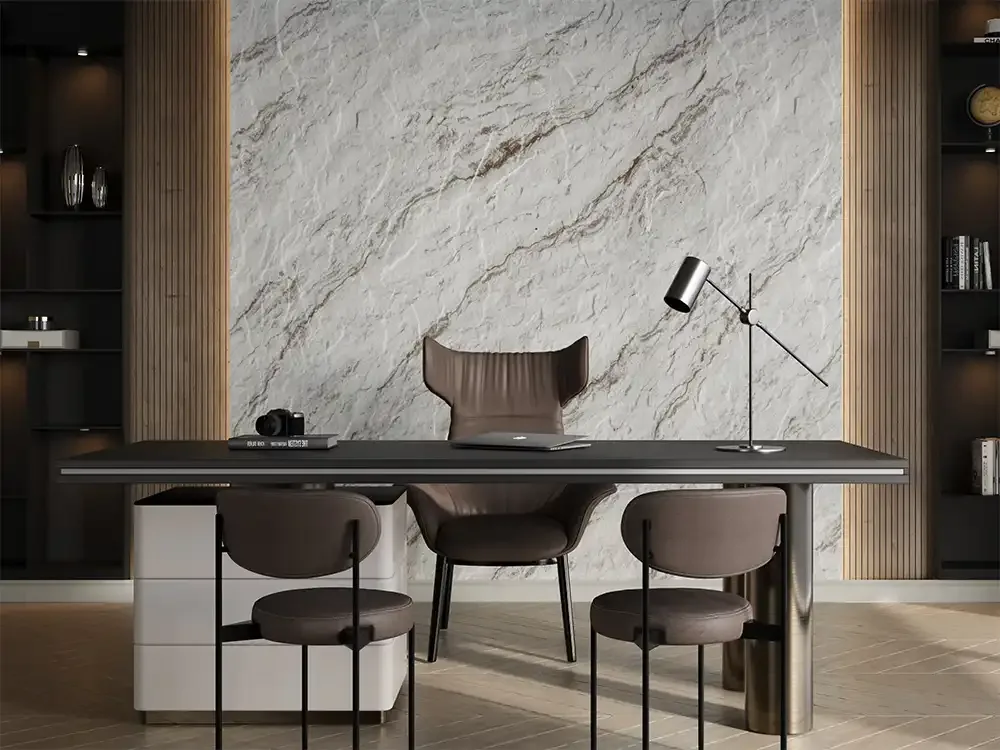
A metallic-looking panel interacts with light differently from an ordinary painted wall. Fine ridges, distressed marks and uneven textures may reveal subtle highlights when illuminated from the side. A broad, flatter pattern can read as a consistent surface from across a room; a relief design may cast shadows that make the wall appear more architectural. This is why a small image rarely tells the entire story. The finished effect depends as much on viewing angle and lighting as on the design code.
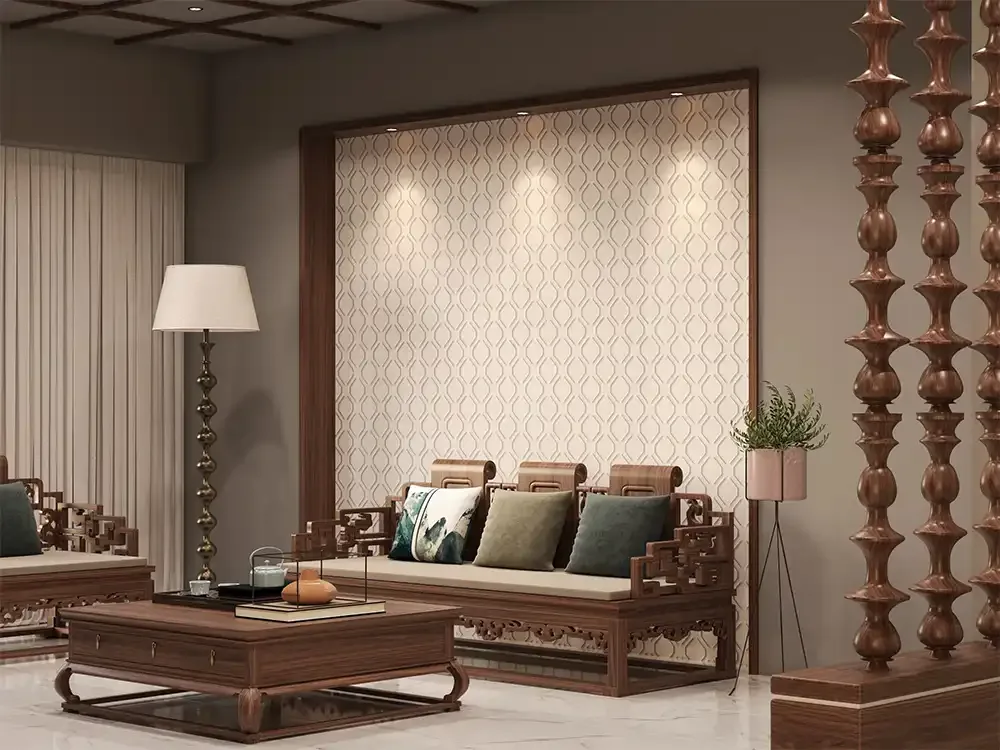
For a restrained scheme, let the panel complement timber, stone-look furniture and neutral upholstery. A bold panel behind busy shelving can lose its impact; the same panel within a simple frame can become the room's defining element.
Selecting Between Mineral, Crafted and Sculpted Textures
A useful first decision is the type of texture you want. Original Metalixo includes decorative impressions inspired by stone, weathered metals, concrete and woven patterns. Victor introduces craft-led, relief-like compositions and designer surfaces for interiors that benefit from a strong visual feature. Metalixo 2.0 supplies another language of structured mineral and geometric surfaces. These are design directions rather than universal technical categories; the exact finish should always be checked against its photograph and physical sample.
Think about whether the material should be noticed immediately or appreciated gradually. Large directional lines create movement, while irregular mineral patterns can remain comparatively quiet at a distance. A heavily structured surface may be particularly sensitive to side lighting and panel alignment.
Decorative Wall Panels for Living Rooms and TV Backdrops
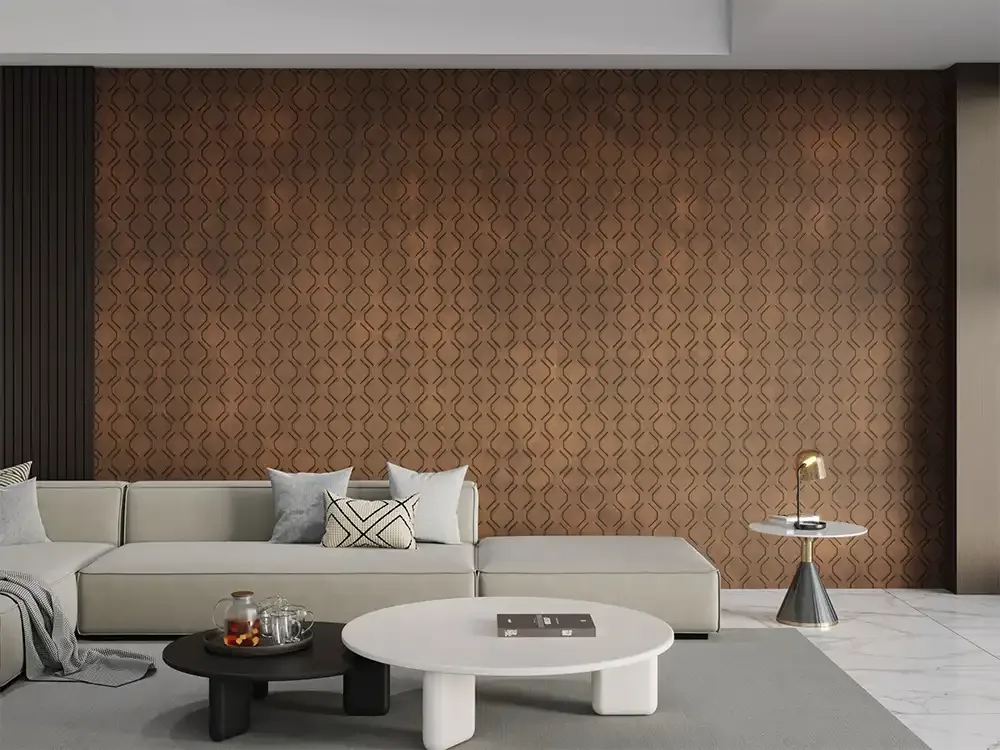
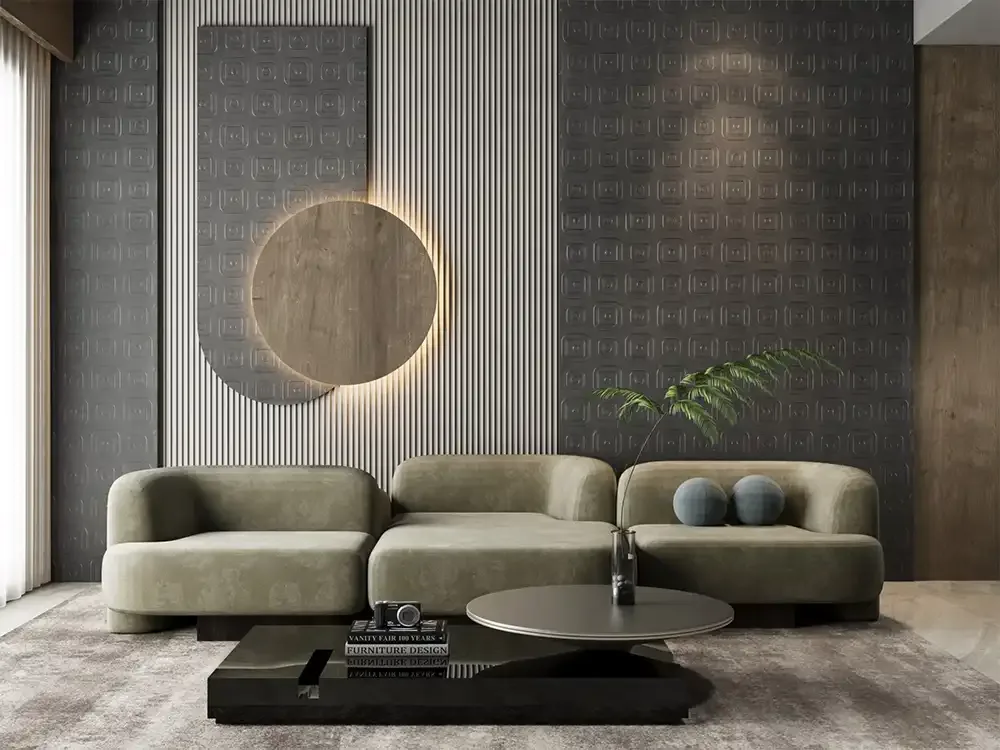
Living-room surfaces need to relate to sofas, curtains, flooring, storage and screens. Designer wall panels can give a television wall a stronger centre without adding several competing materials. A graphite mineral texture suits a dark media console; warm metallic tones can connect to brass details, beige fabrics or wood finishes. Consider whether the design should sit behind the television or frame the wall around it. Avoid placing strong repeating patterns where they interfere with the screen or integrated lighting.
For a well-composed feature wall, plan the surface in relation to the width of the TV unit and the vertical divisions of the wall. Sheet size matters for visible joints and cutting allowances.
Bedrooms, Hallways and Residential Accent Zones
Bedrooms usually call for more controlled contrast than a public lobby. A muted metallic or gently textured surface behind a headboard can add dimension without overwhelming the furniture. If the wall is narrow, a vertical composition may help it feel taller. On a wider wall, use the surface as a centred element that relates to the bed, side tables and lighting positions. Review all samples with the intended warm or cool lamp light before deciding.
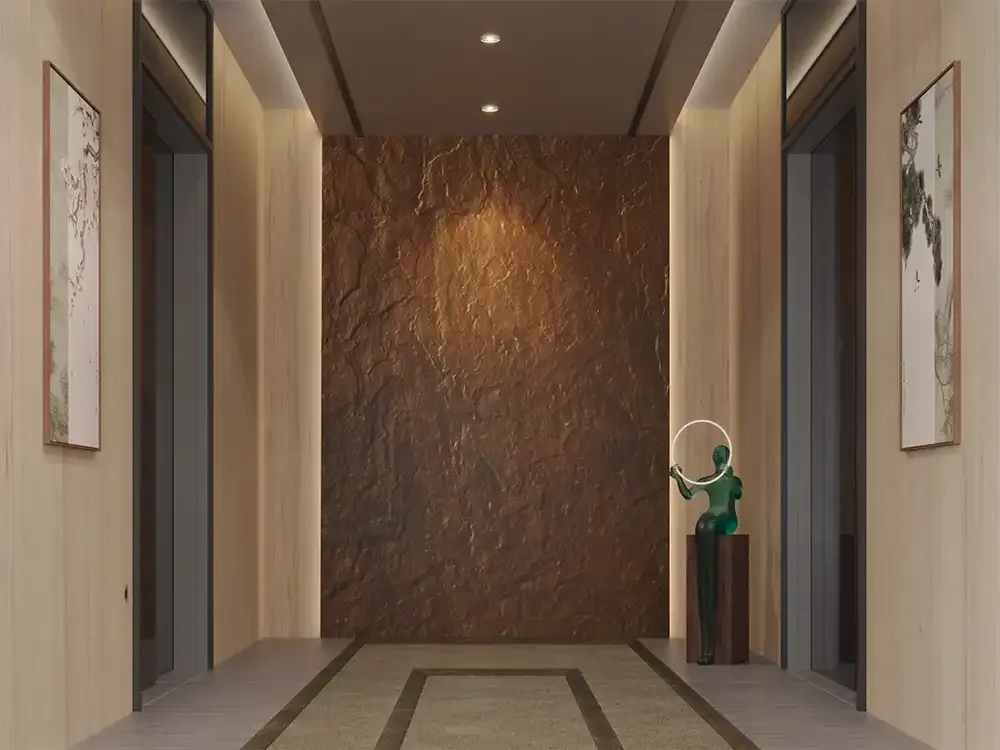
Hallways, staircase landings and entrance spaces offer another opportunity for texture. They are often viewed while moving, so the finish should remain legible from more than one angle.
Commercial Interiors, Retail Displays and Reception Spaces
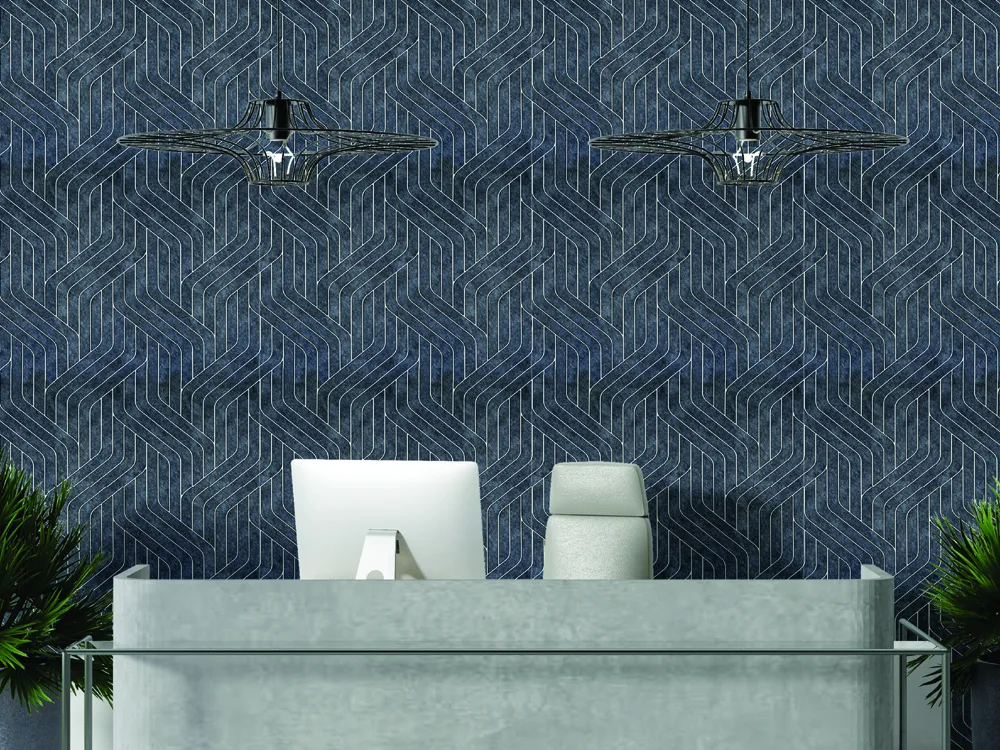
A reception wall communicates the identity of a business before a visitor speaks to anyone. Decorative panels can provide a professional backdrop for signage, reception counters and carefully directed lighting. Victor's crafted-panel presentation can suit focal architectural details, while original Metalixo can be considered for distressed-metal or mineral expressions. Metalixo 2.0 may be appropriate where the project seeks taller-format moulded or geometric visual rhythm. Always review the specific panel against the intended layout and technical requirement.
Retail shops, showrooms, restaurants and hospitality spaces can use a limited textured zone to create a memorable impression. Coordinate the surface with merchandise displays, wayfinding and furniture rather than treating it as a separate decoration.
Size Planning: 2400 mm and 2900 mm Formats
The original Metalixo and Victor catalogues show 600 × 2400 mm designs. Metalixo 2.0 is listed at 600 × 2900 mm, with 2–4 mm thickness dependent on its mould design. These figures help designers estimate sheet divisions and understand why one range might better suit a particular wall proportion. They are not an assurance that every code is in stock in every quantity, nor a substitute for measured site dimensions and a cutting plan.
Before confirming a design, map out vertical and horizontal joints, panel orientation, corner transitions and decorative trims. A taller sheet may reduce a horizontal joint in a given space, but may create different transport or handling considerations.
Facade, Wet-Area and Curved-Surface Claims Need Verification
The original Metalixo and Victor brochures mention facades, bathrooms, main gates, round pillars and wet application, and list waterproof performance among their features. Metalixo 2.0 also includes exterior-related imagery and manufacturer claims. These are brochure descriptions, not a blanket technical approval for prolonged rain exposure, submerged use, flame exposure or every outdoor facade system. The correct use depends on the chosen product, adhesive, joints, substrate, climatic exposure and supporting technical instructions.
Where a project includes bathrooms, kitchens, pillars or exterior-facing walls, request series-specific documentation and obtain installation approval before ordering. It is especially important not to infer a fire rating from an appearance claim or a waterproof rating from a decorative photograph.
Lighting, Joints and Colour Coordination
Metallic and relief surfaces deserve a sample review under the lighting that will actually be installed. Grazing light can highlight texture, but it can also make uneven joints more apparent. Warm LEDs may turn cool greys into a softer colour; daylight may reveal stronger contrast or more apparent metallic reflections. Ask for samples to be positioned vertically where possible and look at them from the expected viewing distance.
Consider the surface alongside handles, frames, marble-look materials, paint and furniture. Dark finishes can be elegant but may need sufficient illumination to reveal their structure. Strong gold designs usually become more effective when the rest of the palette is disciplined.
A Practical Path from Collection to Product Code
Start by selecting the main material and visual category, then open the relevant series and review its individual codes. Compare three physical samples if possible: one quiet neutral, one warm accent and one stronger contrasting option. Review the finish against the planned room, not just a catalogue background. Record the exact series name and product code on drawings, quotations and installation instructions; similarly named metallic panels can use different substrates and formats.
This category page provides the overview. The dedicated Metalixo page explains the original liquid-metal-coated laminate collection, the Victor page explores its craft-led surface language, and the existing Metalixo 2.0 page addresses moulded high-impact polymer panels.
Why Explore Liquid Metal Panels from Mark Decor?
Mark Decor brings several decorative ranges together so a designer can compare a family of finishes under one collection umbrella. The benefit is choice: a project can favour the original Metalixo coating language, Victor's crafted-panel identity or the contemporary format of Metalixo 2.0. Each range has its own code system, giving dealers and specifiers a clearer way to communicate samples and selections than an informal colour nickname.
To move from inspiration to specification, check the exact sample, current stock, sheet size, construction, available technical documentation and installation requirements. The strongest project result comes from matching decorative ambition to practical site conditions.