Louvers
Mark Decor is a specialist PVC louvers manufacturer offering decorative wall panels for homes, offices, retail interiors and hospitality projects. Mark Decor was the first in In...






Louvers Guide
Louvers and Decorative Louvers for Considered Interior Design
A thoughtfully selected louver wall can change the rhythm of an entire room. Vertical profiles introduce repeated lines, subtle shadows and a sense of continuity that a plain painted wall cannot always achieve. Mark Decor Louvers brings together several separate collections so interior designers, homeowners and project teams can match panel proportions and finishes to different spaces rather than select only by colour. This category is the starting point for understanding the louver offering, not a replacement for choosing a particular series.
The broad terms Decorative Louvers, Wall Louvers and Designer Wall Panels describe an interior design approach, not one universal material, size or mounting method. Each Mark Decor range has its own profiles and supplied specifications. A successful scheme begins by deciding what the wall should do: become a focal point, visually connect furniture, create a quiet background or introduce a stronger architectural edge.
How Wall Louvers Change Space Without Overcrowding It
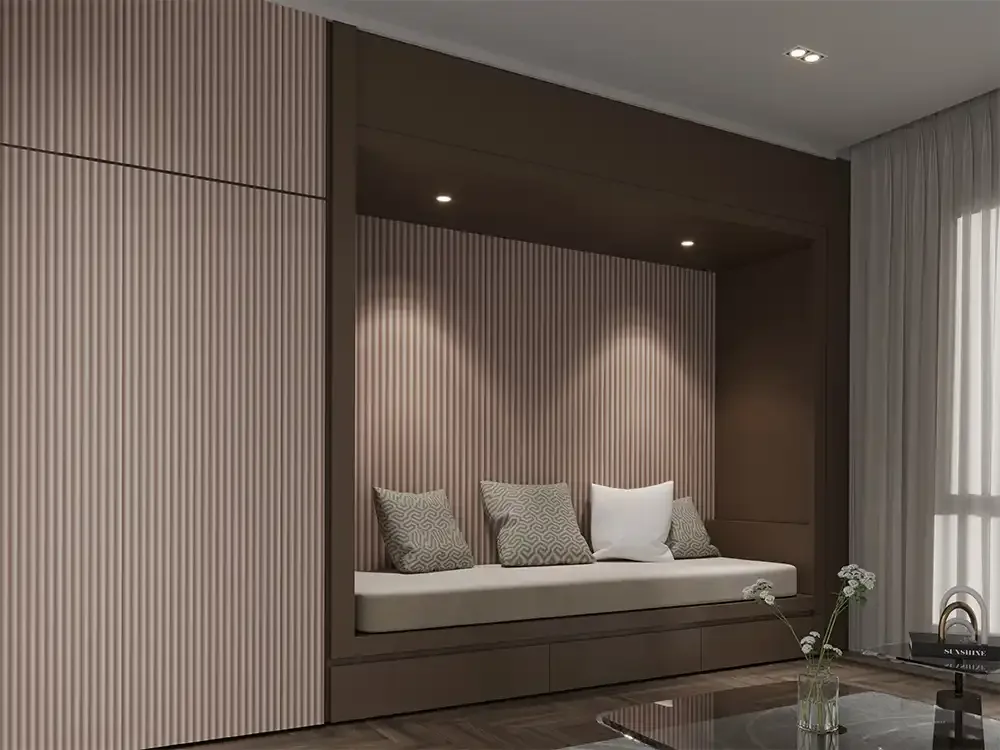
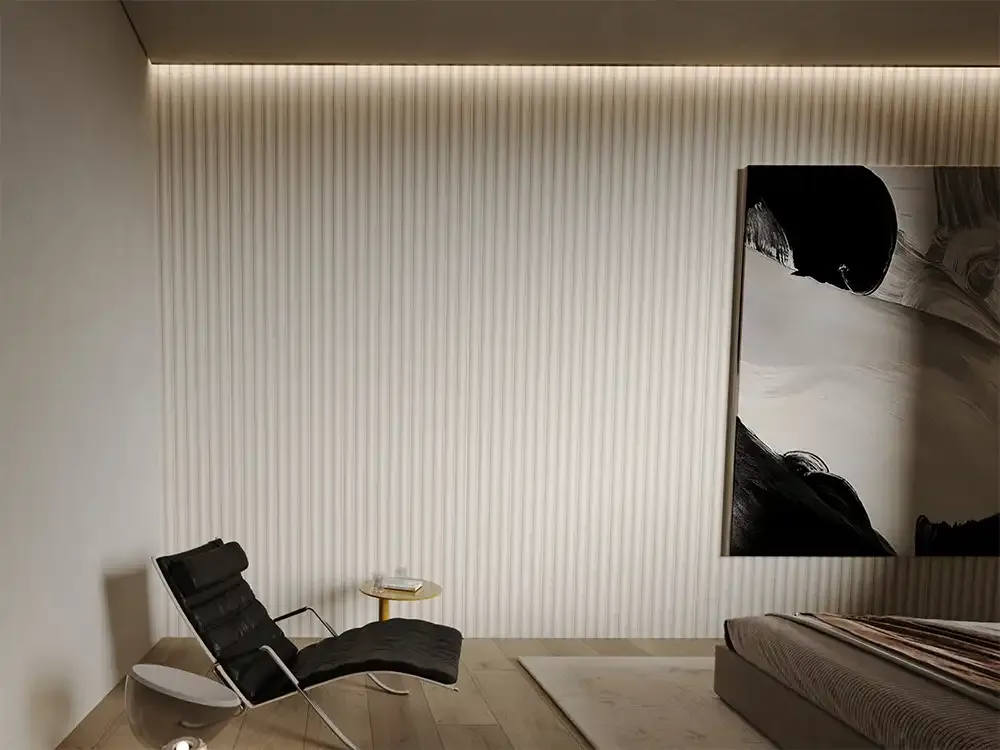
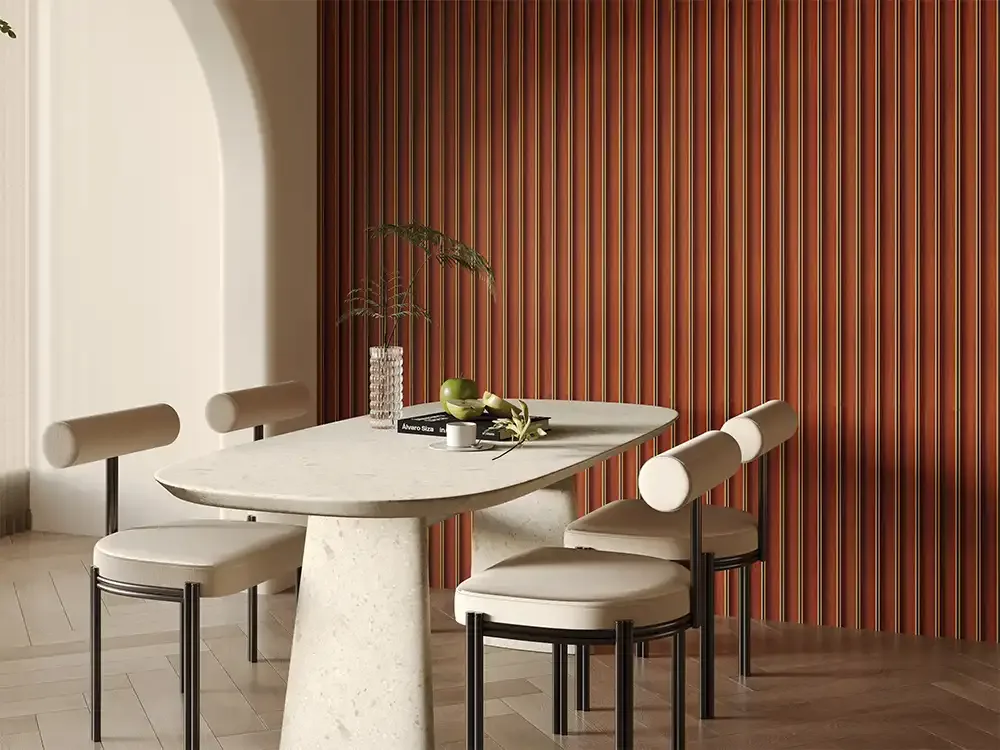
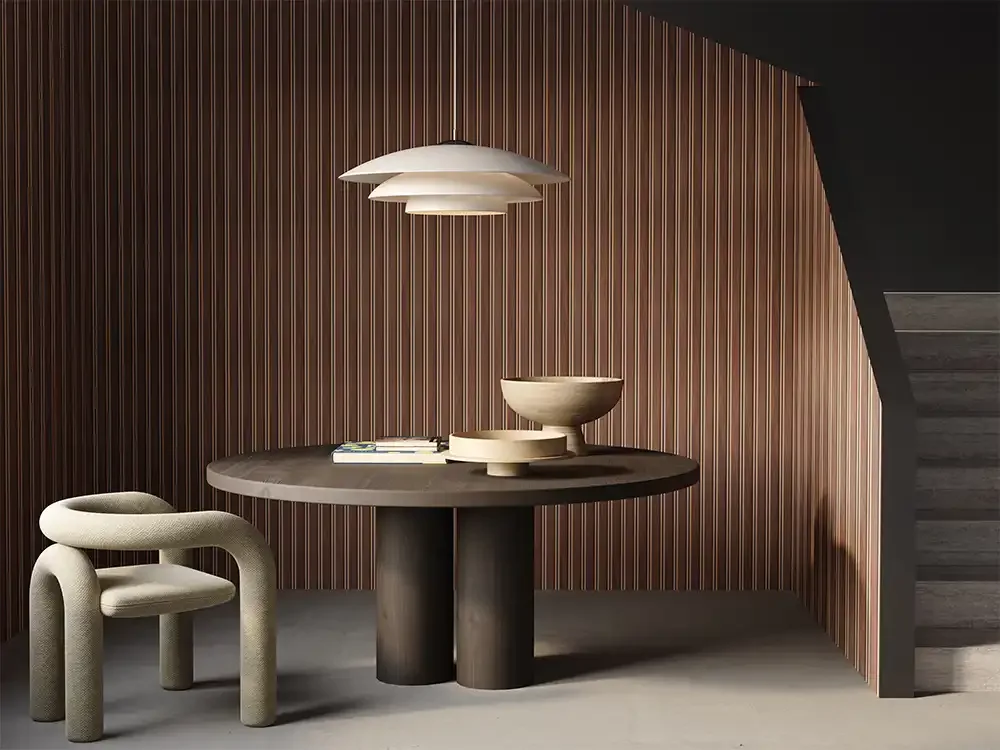
A louver finish introduces variation by repeating a consistent profile. A narrow rhythm tends to look refined in a small seating nook; a wider panel can read as a calmer plane on a large wall. Lighting makes the grooves appear deeper or flatter, and the colour affects whether the repeated lines feel soft or bold. For that reason, one square product photograph should never be the only reference used to select a full-height wall treatment.
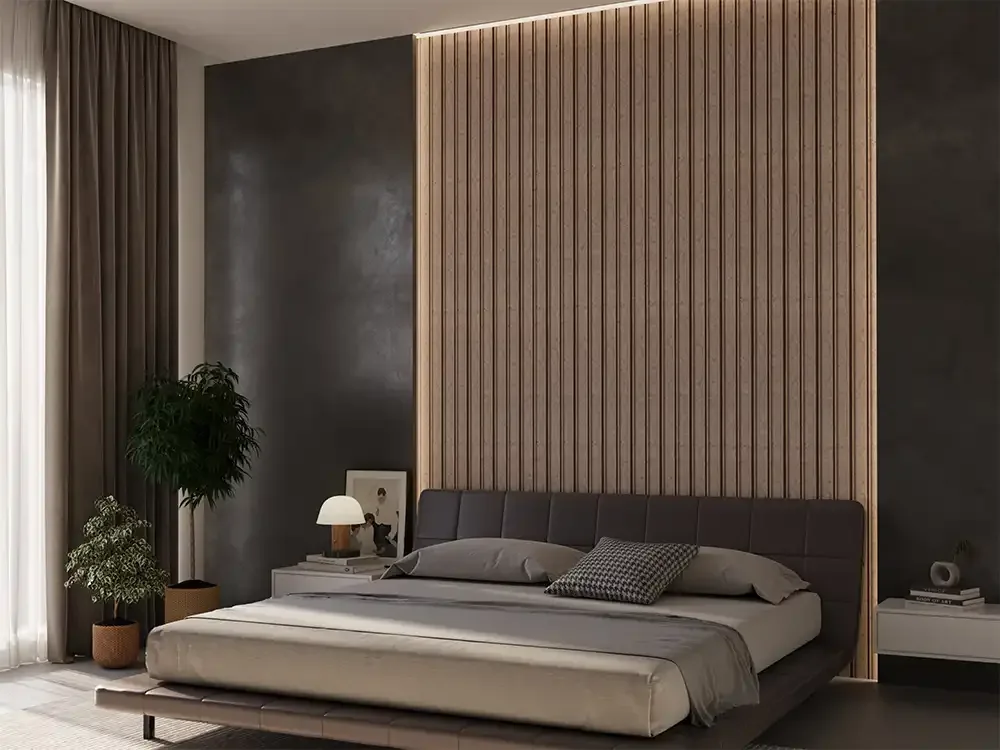
In living rooms, decorative louvers can help frame a sofa or define the space around a low console. In bedrooms, they can provide a restrained headboard background. Near an entry, a short louver feature can announce a change of zone without taking over the adjoining walls. A design is usually strongest when it has a deliberate beginning and end, so plan margins, corners and neighbouring surfaces early.
Choosing Between the Five Mark Decor Louver Collections
Mark Decor groups its louvers into different design systems. Infinite focuses on paired Alpha and Beta components, offering both a patterned profile and a matching linear profile. Volume - 5 is a broad palette of wood-look, stone-look, marble-look and decorative finishes, with length options described in its range information. Volume - 6 introduces a 120 × 2900 × 10 mm profile for tall-format compositions. Volume - 7 offers a 120 mm-wide system with its own wood, mineral, marble and contemporary palette. 30 CM Louvera has a much wider 300 mm face for more expansive surfaces.
These distinctions matter for search and design alike. The Louvers category should answer the broad question “Which type of wall louver suits my space?” Detailed questions about an Alpha-Beta composition, a 30 cm width, the Volume - 5 finish palette or the tall Volume - 6 format belong on the appropriate series page. Browse the individual collections and inspect the actual code and panel sample before comparing prices or planning cutting quantities.
Decorative Louvers for Living Rooms and TV Walls
A good living-room wall combines visual interest with useful space for furniture, lighting and electrical fittings. Light oak and ivory tones can maintain brightness when the room is compact; mid-tone wood looks can soften large neutral seating areas; dark surfaces can make a television or display shelf feel more contained. The louver should usually support the furniture rather than compete with every object in the room.
For a TV wall, check the final screen height, cables, ventilation, access points and the location of shelves before proposing a decorative treatment. Repeated vertical lines help unify separate wall elements, but they are not a substitute for correct mounting of equipment. Where the wall already includes rich marble, strong artwork or patterned upholstery, selecting a calmer louver may produce a more balanced result.
Wall Louvers for Bedrooms, Dining Areas and Workspaces
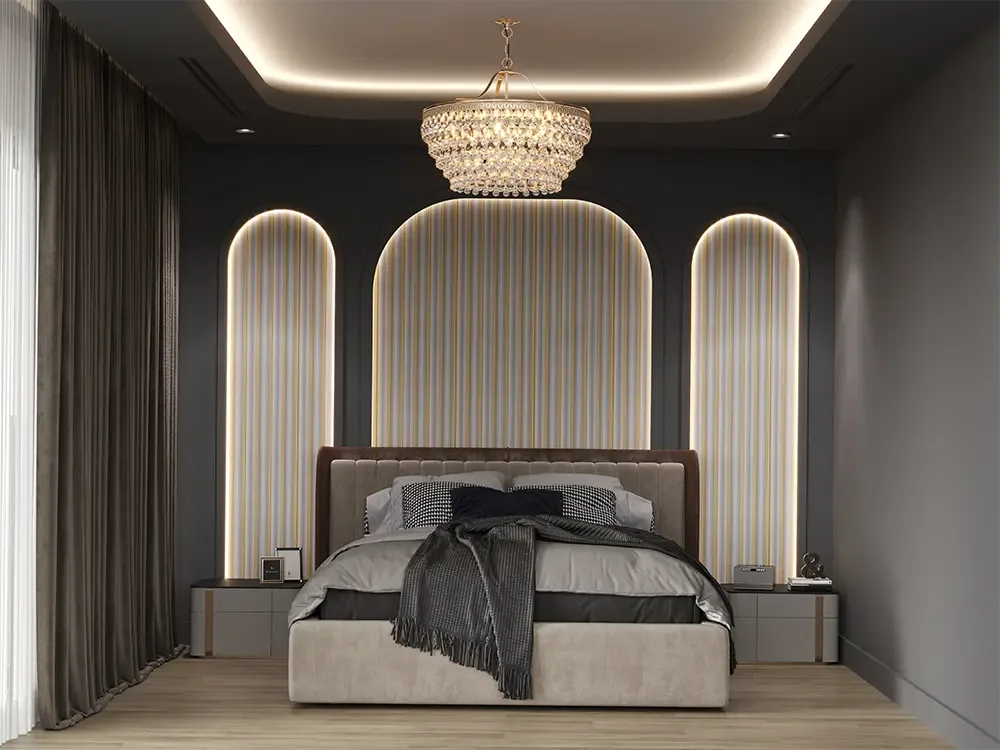
Behind a bed, the repeated structure of wall louvers can create a headboard-scale feature even when the colour is quiet. Taupe, pale ash and softer wood-look finishes often complement linen and upholstered furniture; deeper brown or charcoal louvers can add contrast in rooms with light walls. Use bedside lights carefully: side lighting can emphasise ridges while direct glare may become distracting at night.
Dining rooms, offices and reception spaces call for different priorities. A dining backdrop should sit comfortably behind people and furniture, while a reception wall often needs a clear space for signage. Commercial installations must account for traffic, cleaning access and project requirements, not just the finish on a catalogue page. The appropriate series should be selected after reviewing the surrounding wall construction and the level of use.
Designer Wall Panels: Colour, Finish and Surface Rhythm
The Mark Decor collections include wood-inspired shades, marble effects, mineral appearances, solid colours, metallic-looking accents and decorative patterns. These are design descriptions; a marble-look panel should not be described as solid natural stone, and a metallic-look surface should not be treated as sheet metal without supporting specifications. Finish names are most helpful when they describe the appearance seen on the actual product sample.
For a simple palette, start with a light surface and repeat it in one furniture accent. For a stronger composition, choose one focal louver design and surround it with restrained materials. Charcoal Louvers can be useful where the intention is high contrast, but they should be selected where the light level and room scale support a darker wall. There is no need to make every collection page compete for the same charcoal search phrase.
What to Confirm Before Ordering Wall Louvers
Before ordering, note the wall width, usable height, door and window openings, direction of panel installation and any external corners. Confirm the chosen series and exact product code because panel widths and available lengths are not interchangeable across the five ranges. Work out how the pattern meets ceiling lines, cabinet edges and switches. The installer should verify substrate condition, fixing method, end details and any required trims.
Physical sample approval is particularly important when selecting between two similar wood-look or stone-look designs. View the sample upright, against the materials already chosen for the room, during daytime and under the planned interior lighting. Photos and digital swatches provide useful direction, but they cannot confirm all colour, sheen or texture differences. Allow for careful site measurement and avoid using a generic material specification for the entire Louvers category.
Installation, Maintenance and Responsible Claims
Product installation should follow the current instructions for the selected profile and location. Check wall stability, dryness and any requirements for adhesive, fasteners, finishing trims and panel alignment. Some catalogue documents mention water resistance or other useful features, but a panel feature does not make the entire completed wall waterproof or certify it for every wet or outdoor application. Requirements for fire performance, heat exposure and commercial building use must be confirmed separately when applicable.
Routine care should follow the finish-specific advice supplied by Mark Decor. Avoid assuming that an abrasive cleaner, solvent or sharp tool is suitable for every decorative surface. If panels may be installed close to a cooker, a heater, direct exterior sun or a wet zone, request current technical approval first. Well-chosen decorative louvers combine the right design with appropriate installation and care; they should not be sold through unsupported universal performance promises.
Finding the Right Mark Decor Louver Collection
If you want coordinated pattern-and-line pairings, begin with Infinite. If your decision starts with a broad selection of wood and marble inspired finishes, browse Volume - 5. If you need a defined tall-format panel system, compare Volume - 6. For a compact 120 mm profile and a distinct range of decorative colours, review Volume - 7. When fewer, wider visual divisions suit a large surface, examine 30 CM Louvera and confirm its 300 mm face.
The Mark Decor category page is intended to make that first decision easier. Once the collection is selected, use the subcategory page for exact dimensions, distinctive design families, sample comparisons and series-specific FAQs. Individual product pages should then resolve the final code, finish and room suitability. This progression from broad discovery to specific selection helps visitors compare Louvers without navigating several pages repeating the same answer.
A Practical Brief for Homeowners, Designers and Dealers
Homeowners can bring a room photograph, approximate wall size and two or three finish preferences to a discussion. Interior designers can add a furniture elevation, lighting plan and relevant finish board. Dealers and project buyers should confirm the chosen series, current product code, available lengths, packaging and installation accessories before promising quantities or lead times. Each group benefits from accurate, series-specific information rather than broad promotional claims.
The final selection should be comfortable to live with: textured surfaces are part of the architecture, often seen every day and in different lighting. Choose the level of contrast, repeat density and material appearance that best supports the complete interior. A well-planned louver wall is not defined simply by its catalogue name; its value comes from how deliberately the finish works with the surrounding space.