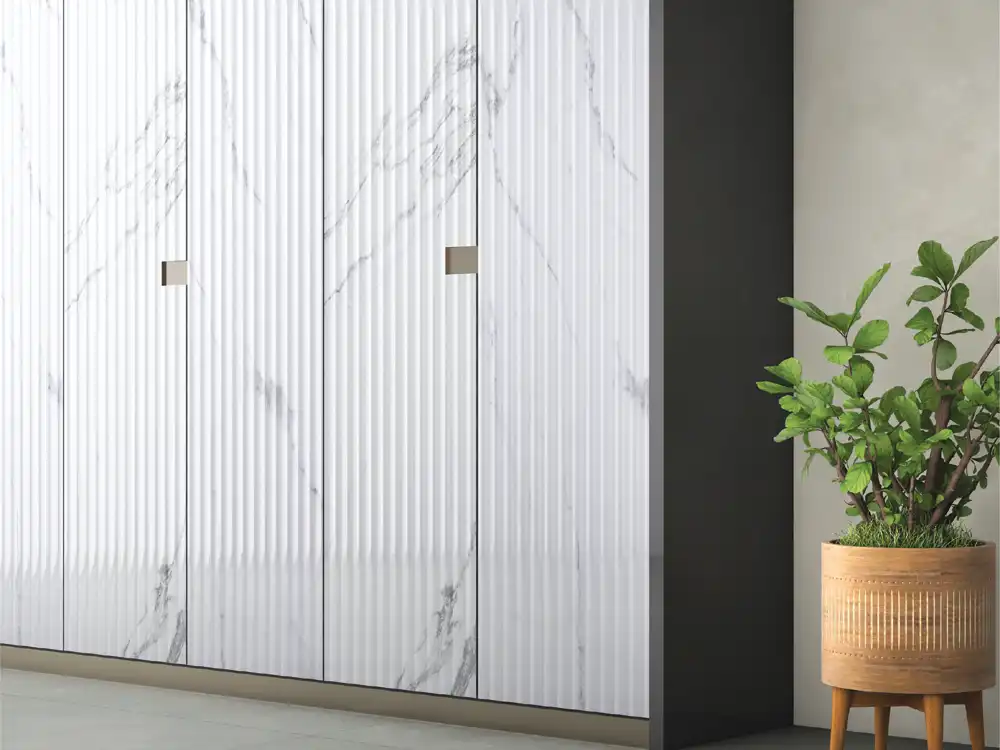
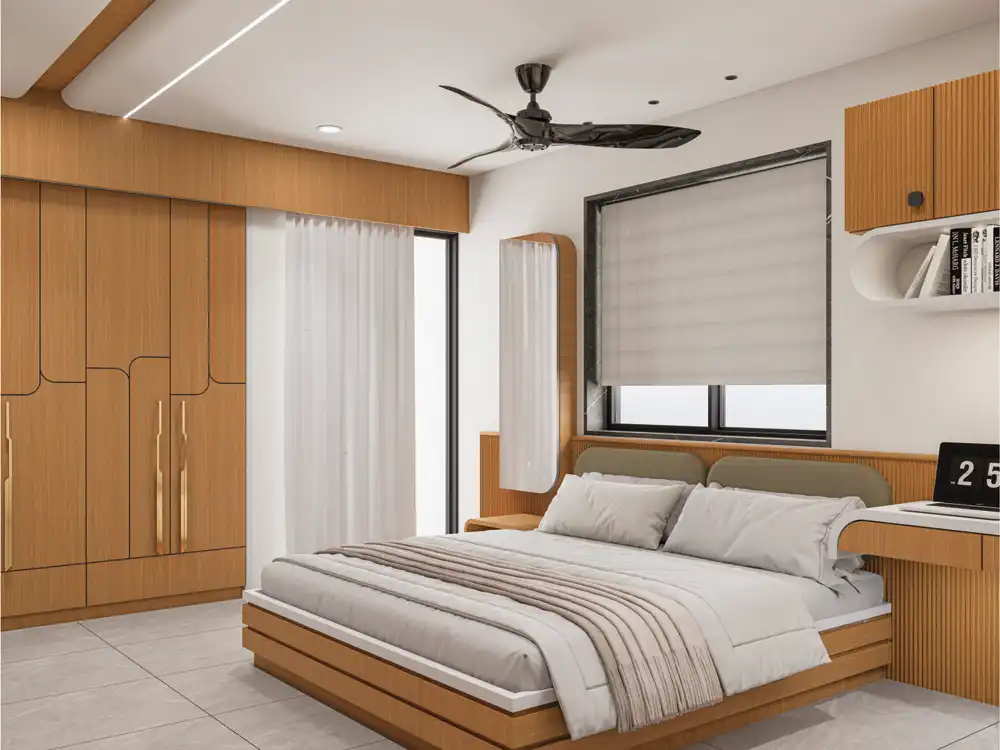
Practical guide to best louver manufacturer in India covering quality, selection, samples, documentation, supply and project buying considerations.
best louver manufacturer in India is a search that usually comes from a buyer already comparing products, manufacturers or project options. This guide uses practical selection criteria instead of unsupported rankings or generic marketing claims.
Explore relevant Mark Decor product routes such as Louvers, Top Louver Brands in India and Interior Louver Brands Comparison. Use current product pages and physical samples as the final reference for collection availability, dimensions and finishes.
1. Interior-louver focus
Compare companies that genuinely specialise in decorative interior louvers.
Test the decision against the real wall, room scale and adjoining materials rather than an isolated product photograph. Furniture, flooring, paint, stone, lighting and ceiling height can all change how the surface is perceived.
2. Range clarity
Collections should be easy to understand.
Test the decision against the real wall, room scale and adjoining materials rather than an isolated product photograph. Furniture, flooring, paint, stone, lighting and ceiling height can all change how the surface is perceived.
3. Product-code discipline
Codes should connect samples, catalogues and orders.
Clear documentation reduces site interpretation. The same collection name and product code should appear on the approved sample, quotation and purchase communication whenever possible.
4. Dimensional consistency
Profile dimensions influence alignment and coverage.
Compare more than one piece under the lighting in which the material will actually be seen. A showroom sample viewed flat on a table can look different once repeated vertically across a complete wall.
5. Finish consistency
Colour and texture should remain coherent.
Compare more than one piece under the lighting in which the material will actually be seen. A showroom sample viewed flat on a table can look different once repeated vertically across a complete wall.
6. Sample quality
Samples should be current and labelled.
Compare more than one piece under the lighting in which the material will actually be seen. A showroom sample viewed flat on a table can look different once repeated vertically across a complete wall.
7. Design breadth
The range should include practical and statement directions.
Test the decision against the real wall, room scale and adjoining materials rather than an isolated product photograph. Furniture, flooring, paint, stone, lighting and ceiling height can all change how the surface is perceived.
8. Dealer support
Dealers benefit from catalogues and displays.
Clear documentation reduces site interpretation. The same collection name and product code should appear on the approved sample, quotation and purchase communication whenever possible.
9. Architect support
Professionals need dimensions and application guidance.
Clear documentation reduces site interpretation. The same collection name and product code should appear on the approved sample, quotation and purchase communication whenever possible.
10. Project supply
Large orders need packing and delivery planning.
For larger orders, keep the approved product code, quantity calculation, delivery notes and photographs together. This helps dealers, designers, contractors and the site team stay aligned when work is delivered in phases.
11. Honest claims
Verified product features should be separated from marketing language.
Test the decision against the real wall, room scale and adjoining materials rather than an isolated product photograph. Furniture, flooring, paint, stone, lighting and ceiling height can all change how the surface is perceived.
12. Long-term consistency
Repeat-order clarity matters.
Compare more than one piece under the lighting in which the material will actually be seen. A showroom sample viewed flat on a table can look different once repeated vertically across a complete wall.
How Mark Decor fits into the selection process
For current products, move from this guide to Louvers, Top Louver Brands in India and Interior Louver Brands Comparison. Related Mark Decor guides can help buyers understand the category before requesting samples or quotations.
Related reading: Louver Manufacturer in India and Catalogues.
Before you place an order
- Confirm the exact collection and product code.
- Review a current physical sample.
- Measure the actual wall or application area.
- Plan corners, edges, cut-outs and transitions before installation.
- Calculate quantity with a realistic cutting allowance.
- Confirm availability, packing and delivery details.
- Use only product-specific verified performance claims.
Use a weighted scorecard instead of a popularity vote
If several manufacturers are shortlisted, assign weights to the criteria that matter for the project. A dealer may give more weight to repeat supply, sample support, and catalogue clarity. An architect may prioritise profile options, specification data, and project samples. A homeowner may value design choice and ease of selection. Scoring does not produce a universal ‘best’ company, but it makes the decision transparent and reduces the influence of advertising or one attractive social-media image.
Compare equivalent products before comparing price
A fair price comparison requires similar profile dimensions, finish complexity, quantity, packing, tax, freight, and service scope. If one manufacturer quotes a different product family, mark it as an alternative rather than forcing it into the same rate table. Ask what is included and excluded. This simple discipline prevents a low figure from appearing better when it represents less material, different dimensions, or a different delivery condition.
Check references relevant to your use case
An installed louver in a small bedroom does not prove experience with a large retail rollout, and a showroom feature wall does not prove suitability for a hotel project. Where references are available, look for applications similar in scale and complexity to your requirement. The objective is not to collect famous project names; it is to understand whether the manufacturer and supply chain have handled comparable selection, quantity, packing, and installation coordination.
Review how easy the brand is to specify
A strong manufacturer becomes easier to work with when collections, codes, dimensions, and samples are organised. Architects can write clearer schedules, dealers can quote accurately, and customers can identify what they selected. This administrative clarity rarely appears in a beauty photograph, but it directly reduces errors. Include it in the comparison rather than scoring only visual range and price.
Reassess the manufacturer for each collection
A company may have excellent overall systems, but each project still depends on an exact product. After the manufacturer shortlist is complete, repeat the check at collection level: sample, dimensions, finish, application, current availability, and quantity. This two-stage decision—manufacturer first, collection second—avoids assuming that every product under a strong brand is automatically the right choice for every wall.
Treat ‘best’ as project-specific language
SEO searches often use words like best and top, but responsible buying should translate those words into criteria. A manufacturer can be the strongest fit for a dealer network and not for a one-off decorative application, or vice versa. Publishing transparent criteria helps users make their own decision and builds stronger authority than unsupported self-ranking. The useful question is not ‘who is best for everyone?’ but ‘who meets the important requirements for this project?’
Frequently Asked Questions
Which is the best louver manufacturer in India?
There is no universal winner for every project. Compare measurable criteria and the actual selected collection.
Should reputation be the only criterion?
No. Review current product evidence.
How can architects compare fairly?
Use the same checklist across equivalent profiles and samples.
Conclusion
Choosing around best louver manufacturer in India is easier when the comparison is based on product identity, consistency, samples, documentation and supply support. A strong manufacturer or brand relationship should reduce uncertainty from selection through delivery.