
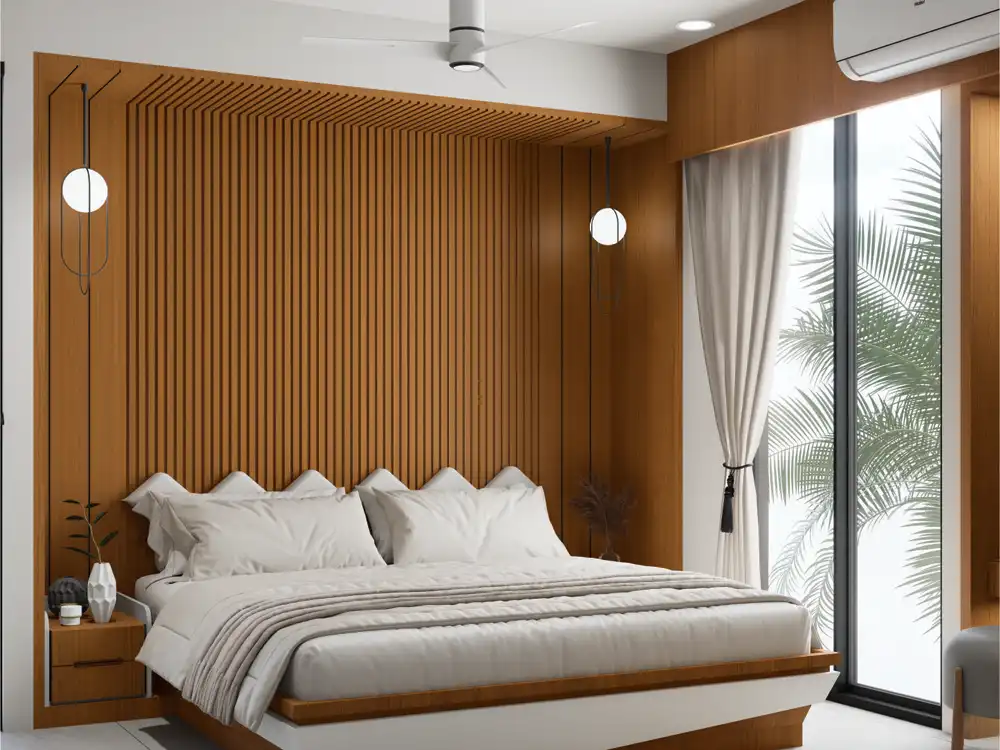
Practical guide to louver manufacturer for dealers covering quality, selection, samples, documentation, supply and project buying considerations.
louver manufacturer for dealers is a search that usually comes from a buyer already comparing products, manufacturers or project options. This guide uses practical selection criteria instead of unsupported rankings or generic marketing claims.
Explore relevant Mark Decor product routes such as Louvers, Mark Decor Catalogues and Volume 6. Use current product pages and physical samples as the final reference for collection availability, dimensions and finishes.
Stock what customers can understand
A dealer range should be easy to present by style, colour, profile and application.
Test the decision against the real wall, room scale and adjoining materials rather than an isolated product photograph. Furniture, flooring, paint, stone, lighting and ceiling height can all change how the surface is perceived.
Sample-to-code mapping
Every display sample should point to the correct current product code.
Compare more than one piece under the lighting in which the material will actually be seen. A showroom sample viewed flat on a table can look different once repeated vertically across a complete wall.
Repeat availability
Fast-moving designs need dependable identification and supply communication.
Test the decision against the real wall, room scale and adjoining materials rather than an isolated product photograph. Furniture, flooring, paint, stone, lighting and ceiling height can all change how the surface is perceived.
Packing versus purchase price
Poor packing can create hidden transit losses.
For larger orders, keep the approved product code, quantity calculation, delivery notes and photographs together. This helps dealers, designers, contractors and the site team stay aligned when work is delivered in phases.
Core display range
Representative neutrals, woods, darks, mineral looks and statement finishes are easier to sell than an overcrowded display.
Test the decision against the real wall, room scale and adjoining materials rather than an isolated product photograph. Furniture, flooring, paint, stone, lighting and ceiling height can all change how the surface is perceived.
Updated catalogues
Old codes create quotation errors.
Clear documentation reduces site interpretation. The same collection name and product code should appear on the approved sample, quotation and purchase communication whenever possible.
Application-led sales training
Staff should explain living-room, TV-wall, bedroom and commercial uses accurately.
Test the decision against the real wall, room scale and adjoining materials rather than an isolated product photograph. Furniture, flooring, paint, stone, lighting and ceiling height can all change how the surface is perceived.
Accurate claims
Teams should repeat verified product information rather than unsupported statements.
Test the decision against the real wall, room scale and adjoining materials rather than an isolated product photograph. Furniture, flooring, paint, stone, lighting and ceiling height can all change how the surface is perceived.
Project orders
Large quantities need separate lead-time and delivery planning.
For larger orders, keep the approved product code, quantity calculation, delivery notes and photographs together. This helps dealers, designers, contractors and the site team stay aligned when work is delivered in phases.
After-sales communication
Responsive code and replacement support improves long-term dealer relationships.
Test the decision against the real wall, room scale and adjoining materials rather than an isolated product photograph. Furniture, flooring, paint, stone, lighting and ceiling height can all change how the surface is perceived.
How Mark Decor fits into the selection process
For current products, move from this guide to Louvers, Mark Decor Catalogues and Volume 6. Related Mark Decor guides can help buyers understand the category before requesting samples or quotations.
Related reading: Louver Supplier for Dealers & Distributors and Contact Mark Decor.
Before you place an order
- Confirm the exact collection and product code.
- Review a current physical sample.
- Measure the actual wall or application area.
- Plan corners, edges, cut-outs and transitions before installation.
- Calculate quantity with a realistic cutting allowance.
- Confirm availability, packing and delivery details.
- Use only product-specific verified performance claims.
Build a dealer range around customer decisions
A dealer display should help customers answer three questions quickly: which profile scale suits the wall, which colour family suits the room, and which collection fits the budget and project requirement. Organise samples so those comparisons are easy. Grouping by warm wood, light neutral, dark architectural, mineral, or statement finishes can be more useful than a wall of unrelated codes. The manufacturer’s catalogue and sample labelling should support that structure.
Track enquiries to improve the display mix
Dealers can record which samples customers request, which products are quoted, and which designs convert into orders. After a few months, this creates a practical picture of local demand. Use that information to refresh the display instead of keeping every sample indefinitely. The objective is not to predict national trends; it is to make the showroom easier to shop and to focus stock or sample space on products customers actually understand and request.
Train staff to explain dimensions and coverage
Sales staff should know the basic profile dimensions and how they affect wall coverage. They do not need to perform final installation calculations, but they should understand why a wider profile and a narrower profile create different visual rhythms and quantities. Clear explanations build customer confidence and reduce unrealistic comparisons between products that are not dimensionally equivalent. Final quantity should still be confirmed against site measurement and installer planning.
Create a process for project quotations
Retail enquiries and project enquiries should not be handled identically. A project may need drawings, room-wise quantities, sample approval, phased delivery, and a longer lead-time discussion. Create a simple internal process that records the architect or contractor contact, project location, selected code, approximate quantity, required date, and sample status. Sharing structured information with the manufacturer makes project support faster and reduces repeated clarification.
Keep replacement communication disciplined
When a customer requests additional material, ask for the original product code, invoice or delivery reference, and a photograph of the installed wall if available. Do not rely only on a verbal colour description. A disciplined replacement process protects both the dealer and customer because it gives the manufacturer better information to identify the required product and explain any availability or visual-matching limitations.
Evaluate the manufacturer as a sales partner
For dealers, the manufacturer relationship extends beyond purchase price. Current catalogues, sample support, clear code systems, responsive order communication, packaging, and product education all influence how easily the category can be sold. A slightly simpler range with better support can outperform a very large catalogue that creates confusion. Long-term supply should therefore be judged by how effectively the manufacturer helps the dealer deliver a reliable customer experience.
Practical decision record
Before finalising a decision around louver manufacturer for dealers, write down the selected collection, exact code, sample approval date, relevant dimensions, quantity basis, installation contact, delivery requirement and any important limitation discussed with the supplier. This short record is useful because interior-surface decisions often pass through several people between selection and installation. Keeping the information together reduces assumptions and gives the project team a clear reference if the order is revised later.
Frequently Asked Questions
What should dealers ask for?
Current catalogues, labelled samples, codes, dimensions and project support.
How many designs should be displayed?
A representative range is often more useful than every design.
Why is repeat supply important?
Customers may need additional material later.
Conclusion
Choosing around louver manufacturer for dealers is easier when the comparison is based on product identity, consistency, samples, documentation and supply support. A strong manufacturer or brand relationship should reduce uncertainty from selection through delivery.


