
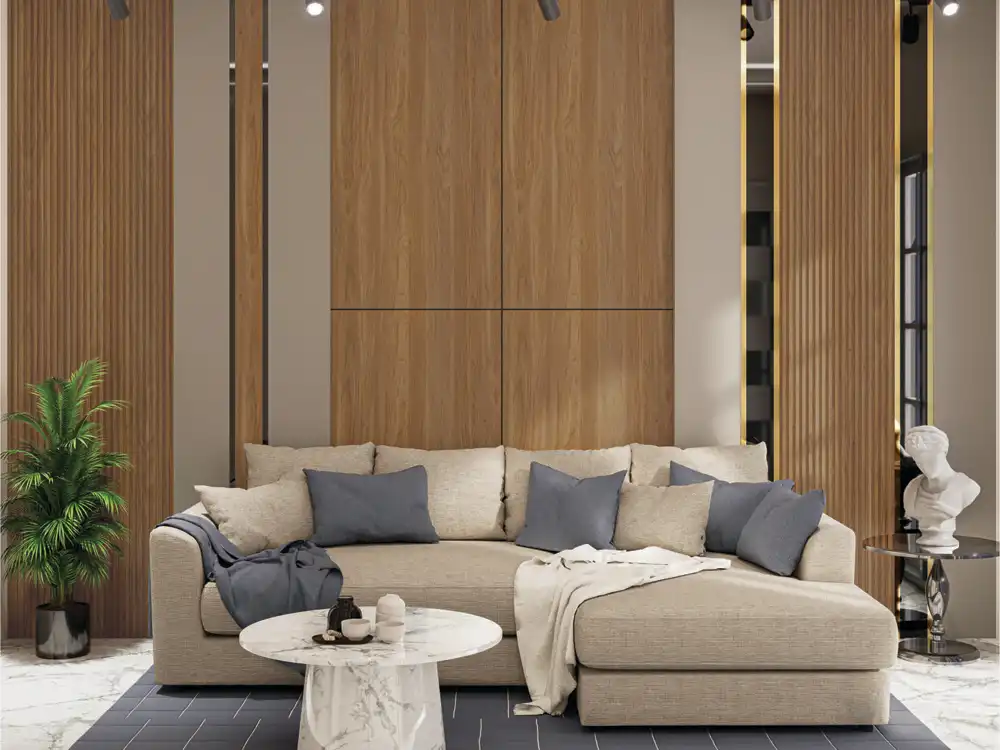
Practical guide to louver manufacturing company covering quality, selection, samples, documentation, supply and project buying considerations.
louver manufacturing company is a search that usually comes from a buyer already comparing products, manufacturers or project options. This guide uses practical selection criteria instead of unsupported rankings or generic marketing claims.
Explore relevant Mark Decor product routes such as Louvers, Volume 5 and Volume 6. Use current product pages and physical samples as the final reference for collection availability, dimensions and finishes.
1. Clear product identity
Stable codes and collection names are more reliable than vague colour descriptions.
Test the decision against the real wall, room scale and adjoining materials rather than an isolated product photograph. Furniture, flooring, paint, stone, lighting and ceiling height can all change how the surface is perceived.
2. Range planning
A useful range balances variety with repeatability.
Test the decision against the real wall, room scale and adjoining materials rather than an isolated product photograph. Furniture, flooring, paint, stone, lighting and ceiling height can all change how the surface is perceived.
3. Repeatable dimensions
Profile geometry influences alignment and coverage.
Test the decision against the real wall, room scale and adjoining materials rather than an isolated product photograph. Furniture, flooring, paint, stone, lighting and ceiling height can all change how the surface is perceived.
4. Sample discipline
Samples should be current, labelled and traceable.
Compare more than one piece under the lighting in which the material will actually be seen. A showroom sample viewed flat on a table can look different once repeated vertically across a complete wall.
5. Product-level claims
Performance statements should belong to the exact collection.
Test the decision against the real wall, room scale and adjoining materials rather than an isolated product photograph. Furniture, flooring, paint, stone, lighting and ceiling height can all change how the surface is perceived.
6. Production checks
Visible and dimensional issues should be identified before dispatch.
Test the decision against the real wall, room scale and adjoining materials rather than an isolated product photograph. Furniture, flooring, paint, stone, lighting and ceiling height can all change how the surface is perceived.
7. Transport packing
Decorative faces and edges need protection.
For larger orders, keep the approved product code, quantity calculation, delivery notes and photographs together. This helps dealers, designers, contractors and the site team stay aligned when work is delivered in phases.
8. Repeat-order communication
Previous codes should be easy to identify.
Test the decision against the real wall, room scale and adjoining materials rather than an isolated product photograph. Furniture, flooring, paint, stone, lighting and ceiling height can all change how the surface is perceived.
9. Dealer and architect support
Catalogues, samples and specifications improve decisions.
Clear documentation reduces site interpretation. The same collection name and product code should appear on the approved sample, quotation and purchase communication whenever possible.
10. Ability to say no
A reliable supplier should explain unsuitable applications rather than claim one product works everywhere.
Test the decision against the real wall, room scale and adjoining materials rather than an isolated product photograph. Furniture, flooring, paint, stone, lighting and ceiling height can all change how the surface is perceived.
How Mark Decor fits into the selection process
For current products, move from this guide to Louvers, Volume 5 and Volume 6. Related Mark Decor guides can help buyers understand the category before requesting samples or quotations.
Related reading: Choose the Right Louver Manufacturer and Louver Supplier for Dealers & Distributors.
Before you place an order
- Confirm the exact collection and product code.
- Review a current physical sample.
- Measure the actual wall or application area.
- Plan corners, edges, cut-outs and transitions before installation.
- Calculate quantity with a realistic cutting allowance.
- Confirm availability, packing and delivery details.
- Use only product-specific verified performance claims.
Look for systems, not isolated promises
Reliable manufacturing is usually visible through organised systems: current catalogues, consistent product codes, repeatable dimensions, labelled samples, clear quotation descriptions, and sensible packing. None of these elements alone proves quality, but together they show whether the company has turned louvers into a structured product category. A supplier that relies only on verbal descriptions or changing colour names can create confusion when the same design passes from salesperson to dealer, architect, contractor, and installer.
Ask how new designs enter the range
A company that develops new collections should still control range complexity. Ask how new designs are identified and how older catalogues are updated. Dealers benefit when additions are easy to understand rather than simply increasing the number of similar options. Architects benefit when a new design has enough information to be specified confidently. Range development should improve choice while preserving product clarity.
Compare communication before and after the order
Many suppliers communicate quickly when a quotation is being prepared. Reliability becomes clearer after the order, when buyers need dispatch information, replacement guidance, or clarification about a product code. Notice whether the same level of accuracy continues through those stages. For a dealer relationship, responsive post-order communication can be more valuable than a small difference in rate because it affects how confidently the dealer can serve their own customer.
Use a trial order for a new relationship
When practical, begin a new supplier relationship with a manageable order before committing to a large multi-site requirement. Review the material, packing, documentation, delivery communication, and how questions are handled. This does not mean a small order predicts every future project, but it gives both sides a chance to understand expectations. A successful trial also provides physical samples and real installation feedback for future buying decisions.
Check whether limitations are communicated clearly
A trustworthy manufacturer does not need to claim that every design is suitable for every condition. Product-specific limitations are useful information. If a collection has particular installation, cleaning, substrate, or application considerations, those should be communicated rather than hidden behind a generic ‘premium quality’ statement. Honest limitations help designers choose correctly and reduce complaints caused by using a good product in the wrong situation.
Think about relationship value over several projects
Dealers and professional buyers should evaluate what the manufacturer relationship will look like after six months or several projects. Will product codes remain understandable? Can catalogues be updated easily? Are samples available for new designs? Is repeat-order communication straightforward? Long-term value comes from reducing friction in many small decisions. A reliable louver company makes the category easier to sell, specify, order, receive, and support.
Practical decision record
Before finalising a decision around louver manufacturing company, write down the selected collection, exact code, sample approval date, relevant dimensions, quantity basis, installation contact, delivery requirement and any important limitation discussed with the supplier. This short record is useful because interior-surface decisions often pass through several people between selection and installation. Keeping the information together reduces assumptions and gives the project team a clear reference if the order is revised later.
Frequently Asked Questions
What is the strongest sign of reliability?
Consistency across product identity, dimensions, finish, supply and communication.
Why are labelled samples important?
They connect design approval to ordering.
Should manufacturers guide installation?
Basic product guidance is useful, but site installation must suit the actual substrate and conditions.
Conclusion
Choosing around louver manufacturing company is easier when the comparison is based on product identity, consistency, samples, documentation and supply support. A strong manufacturer or brand relationship should reduce uncertainty from selection through delivery.


