
A design-focused guide to living room louver wall ideas, from TV unit backdrops to sofa walls, lighting details and finish selection.
A living room should feel complete the moment someone walks in. Furniture plays its part, lighting sets the mood, but the wall treatment often decides whether the room looks ordinary or designed. This is where a well-planned louver design for living room walls can make a noticeable difference.
Louver wall panels add vertical rhythm, surface depth and a premium architectural finish. They are not loud, but they are visible. They do not take over the room, but they make the wall feel intentional. If you are still understanding the basics, start with the pillar guide on what louvers are, their uses, types and benefits. This article focuses only on living room applications.
Why Louvers Suit Living Room Interiors
Living rooms usually need a balance of style and comfort. A flat painted wall can look unfinished, while too many heavy materials can make the space feel crowded. Louvers sit between these two extremes. Their repeated lines create height and depth while keeping the overall look clean.
- Vertical height: Vertical louvers can make a low wall appear taller.
- Depth: Grooves and ribs create natural shadow lines.
- Premium finish: A louver wall gives the room a planned interior-design look.
- Easy pairing: Louvers work with lighting, marble-look panels, mirrors, cabinets and neutral paint.
1. TV Unit Louver Wall Design
The TV wall is the most common place to use louvers in a living room. A louver backdrop makes the entertainment area look structured and helps reduce the flatness of a plain wall. You can use louvers behind the full TV unit, only on one side, or as vertical side bands around the screen.
If the television wall is the main design focus, combine the louvers with soft indirect lighting and simple cabinetry. For deeper planning, read louvers for TV unit back wall design ideas.
2. Sofa Back Wall with Louvers
The wall behind the sofa is another strong application. A vertical louver feature behind the seating area adds elegance without needing too many frames, shelves or decorative pieces. This works especially well when the sofa is plain and the room needs texture.
For compact living rooms, choose subtle profiles and lighter tones. For larger rooms, deeper wood tones or bold decorative finishes can create a richer feature wall.
3. Full-Height Feature Wall
A full-height louver wall can transform a living room. It works best when the wall has enough width and the ceiling height allows the vertical lines to breathe. In duplex spaces, formal lounges and premium apartments, full-height louvers create a strong architectural statement.
The key is restraint. If one wall is treated with louvers, keep the nearby walls calmer. This helps the louver wall remain the highlight instead of competing with too many materials.
4. Louvers with Lighting
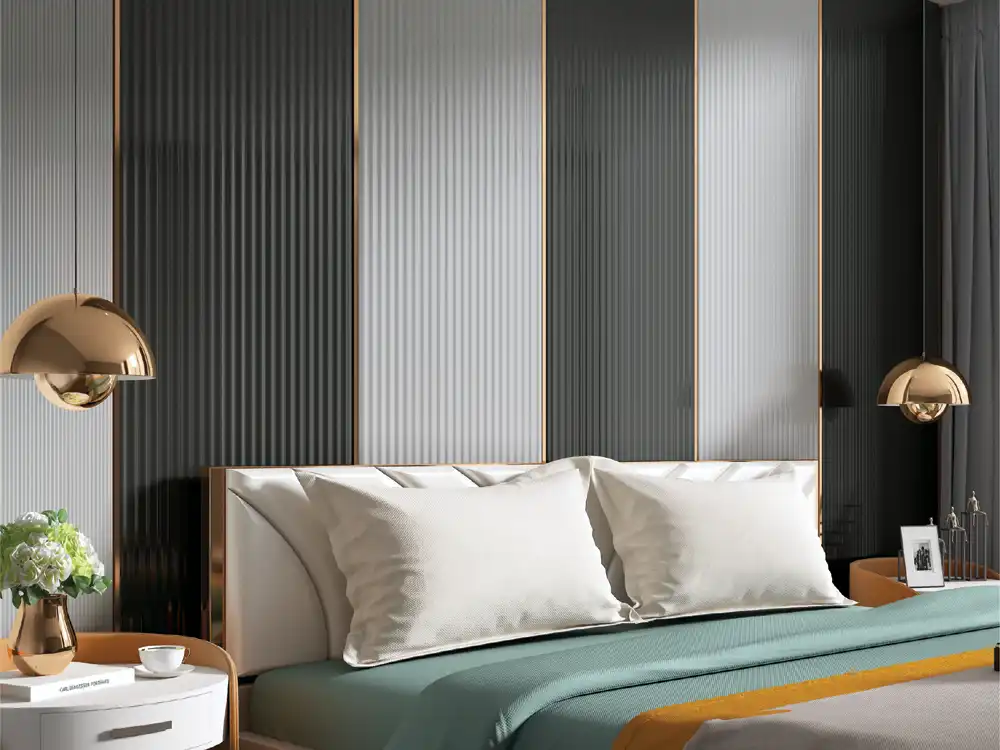
Lighting is what brings louver grooves to life. Warm cove lighting, side profile lighting or concealed strip lighting can highlight the surface depth. The shadows become softer, the finish appears richer and the living room gets a premium evening mood.
Avoid very harsh direct lights on glossy or dark surfaces unless the design is intentionally dramatic. Soft lighting usually gives a more refined result.
5. Wood-Finish Louvers for a Warm Living Room
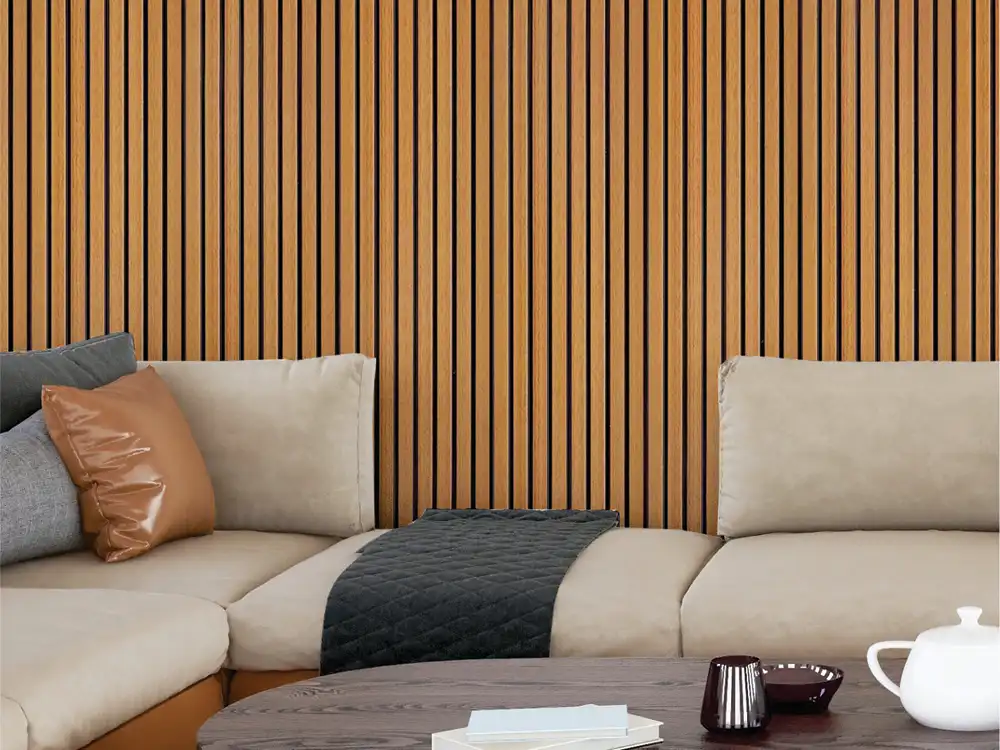
Wood-finish louvers remain popular because they make the living room feel warm and welcoming. They pair well with beige sofas, cream walls, warm lighting and natural flooring. They also help create a premium look without making the space feel too formal.
For finish-specific ideas, read wooden finish louvers for warm and premium interiors.
How to Pick the Right Living Room Louver Design
- Use vertical profiles if you want the wall to appear taller.
- Choose light or medium tones for smaller rooms.
- Use dark finishes only when the space has enough light.
- Match the finish with flooring, curtains and furniture.
- Keep one clear focal point instead of using louvers on every wall.
Living Room Louver Mistakes to Avoid
Do not mix too many strong materials on the same wall. Louvers, stone-look panels, mirrors, metallic finishes and bright lighting can look premium only when they are controlled. Also avoid choosing a profile that is too bold for a small room. The best louver design is the one that improves proportion, not just the one that looks heavy.
FAQs
Are louvers good for living room walls?
Yes. Louvers are excellent for living room walls because they add texture, depth and a premium design finish to TV walls, sofa walls and feature areas.
Which louver finish is best for living rooms?
Wood finish, warm neutrals, greys and premium decorative tones are commonly used. The right finish depends on the furniture, flooring and lighting of the room.
Can louvers be used in small living rooms?
Yes, but choose slim profiles and lighter shades so the wall does not feel heavy.
Plan Your Living Room Louvers
Before finalizing, compare profiles, finishes and combinations. You can also read how to choose louvers for home interiors for a practical selection checklist.
Download Mark Decor catalogues or contact Mark Decor for product and project guidance.
Practical Project Planning Notes
When planning best louver designs for living room walls, the most important step is to connect the design idea with the actual room conditions. A louver wall that looks premium in a catalogue should also suit the wall height, furniture layout, lighting direction and daily usage of the space. For Indian homes, showrooms and offices, this means checking the full wall area, deciding whether the louver should become the main feature or a supporting texture, and selecting a finish that coordinates with flooring, doors, cabinets and soft furnishings.
For a compact room, a clean vertical profile and a calm finish usually work better than a very bold design. For a large living room, reception, showroom or hotel wall, deeper profiles and richer tones can create a stronger architectural statement. Designers should also review the wall under warm and white lighting because grooves, shadows and wood-inspired finishes change their appearance as the light changes.
Selection Checklist for Dealers, Designers and Homeowners
- Match the louver profile with the scale of the wall and the height of nearby furniture.
- Check whether the surface will be seen from the front, side angle or both.
- Use sample pieces near the actual wall before confirming the final colour or finish.
- Keep lighting simple; side lighting can highlight grooves, while direct glare can make the wall look busy.
- Plan junctions with ceilings, skirting, TV units, cabinets and switches before installation.
A good louver design should not feel like an afterthought. It should become part of the interior language. For example, a living room wall can connect with the TV unit, a bedroom headboard wall can connect with wardrobes, and a commercial reception wall can connect with signage and brand colours.
Common Mistakes to Avoid
A frequent mistake is using too many decorative surfaces in one view. Louvers already create texture, so they work best when nearby materials are balanced. Another mistake is selecting a dark finish in a room with limited light. Darker louvers can look premium, but they need controlled lighting and enough surrounding contrast. Finally, avoid ignoring maintenance access. Grooves and edges should remain easy to clean with gentle routine care.
Mark Decor Guidance
Mark Decor louver collections are designed for homes, offices, hospitality spaces, showrooms and project interiors where finish consistency and premium appearance matter. Dealers and designers can use catalogues to compare louver profiles, wood tones, decorative colours and coordinated surface options before finalizing a scheme. For the best result, shortlist two or three finishes, compare them with the room palette and then decide the profile that gives the right depth without overpowering the design.