
Practical TV wall louver ideas for modern homes, including layout options, lighting tips, finish selection and common mistakes to avoid.
The TV unit is no longer just a place to mount a screen. In most homes, it becomes the main wall of the living room. That is why louvers for TV wall designs have become so popular. They give the wall texture, frame the entertainment area and make the room look more finished.
This guide is written like a planning checklist. If you want to understand louvers from the beginning, read what louvers are, their uses, types and benefits. If your focus is only the living room, also see best louver designs for living room walls.
Why Use Louvers Behind a TV Unit?
A plain TV wall can look empty even after adding cabinets. Louvers solve this by giving the wall a vertical or linear design language. They also help divide the wall visually, so the screen, storage and decor elements look more organized.
- They create a premium backdrop without heavy decoration.
- They add texture around the TV unit.
- They pair well with floating cabinets and shelves.
- They help the entertainment wall look planned and balanced.
Popular TV Wall Louver Layouts
1. Louvers on One Side of the TV
This is a clean and safe layout. Use louvers on the left or right side of the TV, and keep the remaining area simple. It works well in compact living rooms where a full louver wall may feel too heavy.
2. Full Backdrop Behind the TV
For a stronger design statement, louvers can cover the full TV wall. This layout suits larger living rooms, show flats and premium spaces where the entertainment wall is the visual focus.
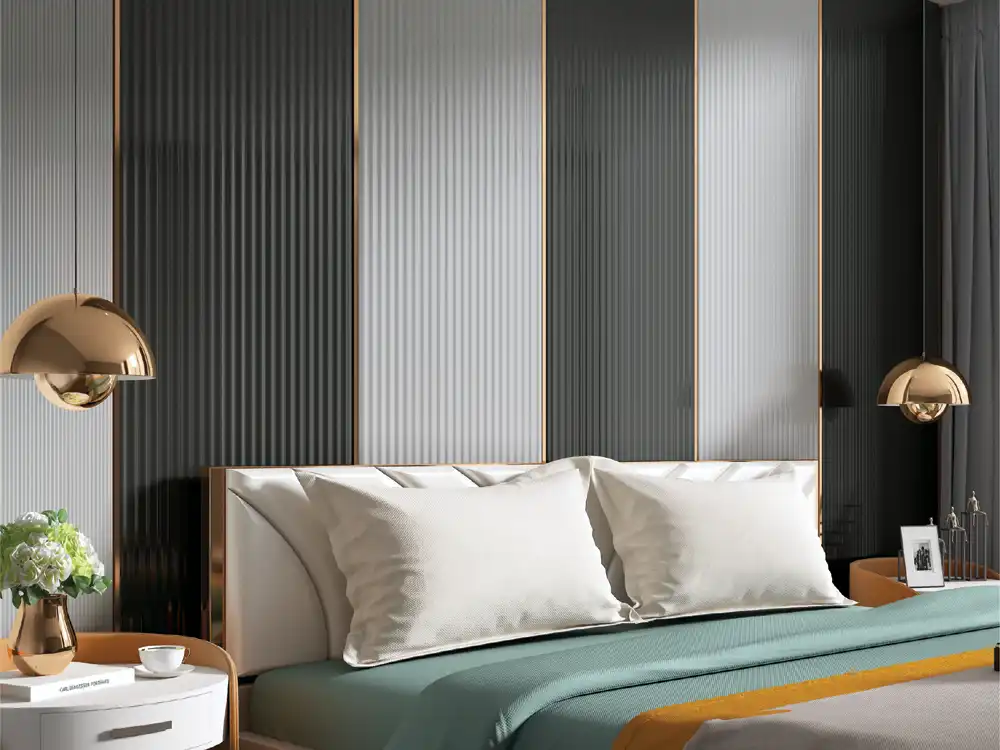
3. Louvers with Stone-Look or Plain Panels
Many modern TV walls combine louvers with stone-look panels, neutral panels or acrylic-style surfaces. The contrast between grooved texture and flat surface makes the wall more interesting.
4. Louvers as a Vertical Frame
Another smart option is to use louvers as vertical framing strips around the screen and cabinets. This gives the wall structure without covering the entire surface.
Best Finishes for TV Unit Louvers
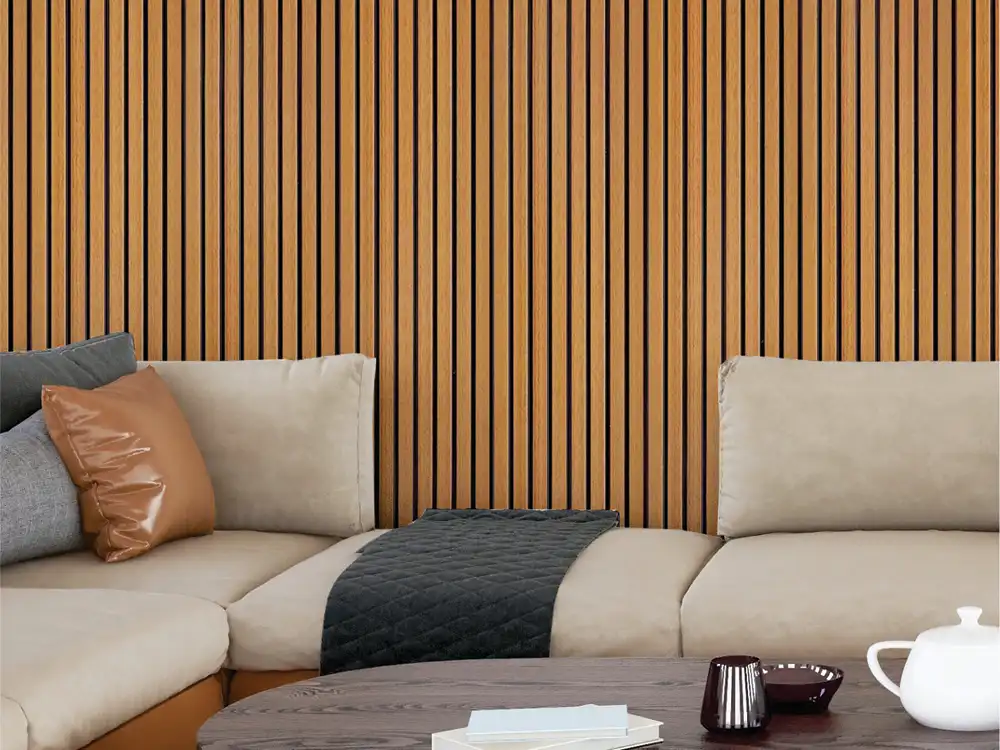
Wood-finish louvers are a strong choice for warm living rooms. Grey, beige, walnut, charcoal and premium decorative shades can also work depending on the room. If the room already has dark furniture, a medium or lighter louver tone may balance the wall better.
Read wooden finish louvers for warm and premium interiors if you are comparing wood-inspired options.
Lighting Tips for a Louver TV Wall
Lighting can completely change how a louver TV wall looks. A soft vertical light along the edge of the louver panel can create elegant shadows. Cove lighting above the wall adds warmth. Keep the lighting gentle so it does not disturb TV viewing.
Practical Planning Tips
- Keep enough visual space around the TV screen.
- Do not place very bright lights directly behind the TV.
- Match the louver finish with cabinet and flooring tones.
- Use slimmer profiles for small walls.
- Plan sockets, wiring and service access before installation.
Mistakes to Avoid
The most common mistake is overdesigning the wall. If the TV unit already has shelves, lights, cabinets and decorative panels, adding too many louver sections can make it busy. Another mistake is selecting a finish only from a small sample without checking how it looks in actual room lighting.
FAQs
Are louvers suitable behind a TV?
Yes. Louvers are suitable behind a TV when planned properly. They add depth and texture while keeping the wall premium and modern.
Which direction is better for TV wall louvers?
Vertical louvers are more common because they add height and structure. Horizontal or mixed layouts can work when the design concept supports them.
Can I combine louvers with cabinets?
Yes. Louvers pair well with floating cabinets, wall-mounted shelves and storage units.
Final Thought
A good TV wall should look attractive but not distracting. Louvers help create that balance. For broader material selection, continue with louvers vs wall panels and how to choose louvers for home interiors.
View Mark Decor catalogues or connect with the Mark Decor team for TV wall louver options.
Practical Project Planning Notes
When planning louvers for tv unit back wall: design ideas and benefits, the most important step is to connect the design idea with the actual room conditions. A louver wall that looks premium in a catalogue should also suit the wall height, furniture layout, lighting direction and daily usage of the space. For Indian homes, showrooms and offices, this means checking the full wall area, deciding whether the louver should become the main feature or a supporting texture, and selecting a finish that coordinates with flooring, doors, cabinets and soft furnishings.
For a compact room, a clean vertical profile and a calm finish usually work better than a very bold design. For a large living room, reception, showroom or hotel wall, deeper profiles and richer tones can create a stronger architectural statement. Designers should also review the wall under warm and white lighting because grooves, shadows and wood-inspired finishes change their appearance as the light changes.
Selection Checklist for Dealers, Designers and Homeowners
- Match the louver profile with the scale of the wall and the height of nearby furniture.
- Check whether the surface will be seen from the front, side angle or both.
- Use sample pieces near the actual wall before confirming the final colour or finish.
- Keep lighting simple; side lighting can highlight grooves, while direct glare can make the wall look busy.
- Plan junctions with ceilings, skirting, TV units, cabinets and switches before installation.
A good louver design should not feel like an afterthought. It should become part of the interior language. For example, a living room wall can connect with the TV unit, a bedroom headboard wall can connect with wardrobes, and a commercial reception wall can connect with signage and brand colours.
Common Mistakes to Avoid
A frequent mistake is using too many decorative surfaces in one view. Louvers already create texture, so they work best when nearby materials are balanced. Another mistake is selecting a dark finish in a room with limited light. Darker louvers can look premium, but they need controlled lighting and enough surrounding contrast. Finally, avoid ignoring maintenance access. Grooves and edges should remain easy to clean with gentle routine care.
Mark Decor Guidance
Mark Decor louver collections are designed for homes, offices, hospitality spaces, showrooms and project interiors where finish consistency and premium appearance matter. Dealers and designers can use catalogues to compare louver profiles, wood tones, decorative colours and coordinated surface options before finalizing a scheme. For the best result, shortlist two or three finishes, compare them with the room palette and then decide the profile that gives the right depth without overpowering the design.