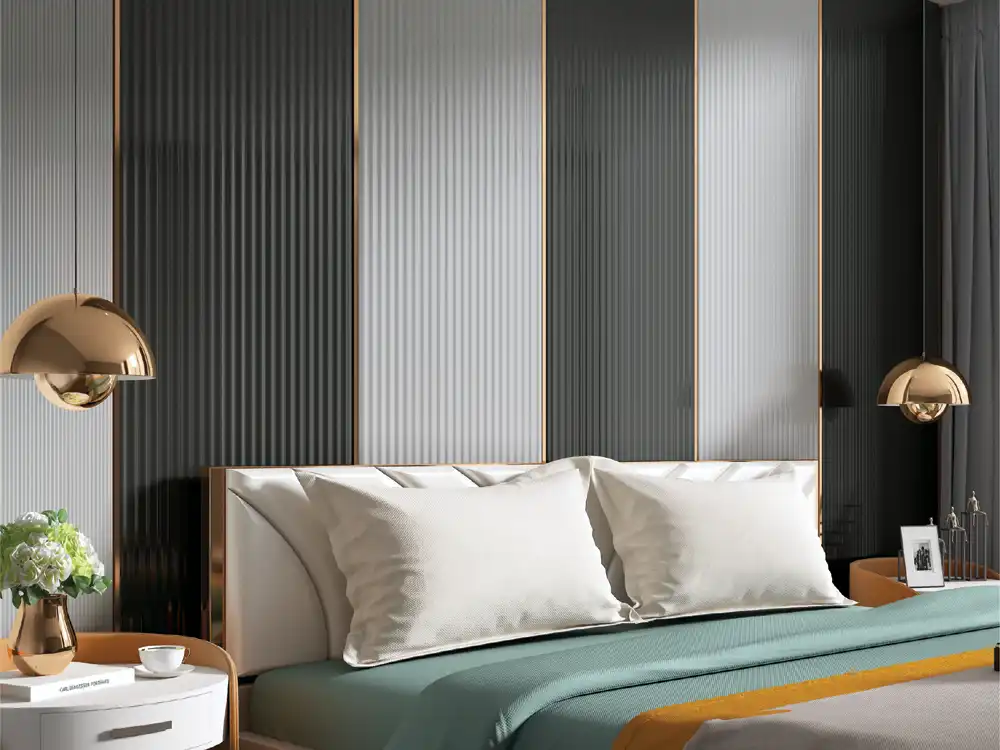

Explore balanced louver design for foyer walls using vertical proportions, mirrors, consoles, lighting and colour choices suited to modern Indian entrance spaces.
The foyer is the first designed moment inside a home. It may be compact, narrow or connected directly to the living room, but it immediately sets expectations for the rest of the interior. That is why louver design for foyer walls has become popular in modern Indian homes: vertical grooves can add rhythm, height and visual depth without requiring a large amount of furniture or decoration.
The challenge is balance. A foyer can easily become crowded when designers combine louvers, mirrors, consoles, lights, artwork, storage and multiple finishes in a small zone. The most successful louver foyer walls usually choose one strong idea and allow the surrounding elements to support it.
The following design approaches can help you create a modern entrance wall that feels intentional rather than busy.
Why vertical louvers work well in foyers
Most foyers benefit from a sense of height. Vertical louver lines naturally guide the eye upward, which can make a short entrance wall appear taller and more architectural. The grooves also create changing shadow lines as you move past the wall, giving the entrance a dynamic quality that paint alone cannot provide.
Louvers are particularly effective where the foyer has limited floor area. Instead of introducing a deep display cabinet, the wall itself becomes the decorative feature. A slim console, floating shelf or mirror can then be added without overwhelming the passage.
Idea 1: Full-height louver wall with a slim console
For a clean contemporary entrance, cover one selected wall from skirting level to ceiling with vertical louvers and place a narrow console in front. Keep the console simple so the wall remains the main visual element.
This approach works well in apartments where the entrance opens into the living area. The louver wall defines the foyer as a separate visual zone even if there is no physical partition. Choose a medium wood tone for warmth, a light neutral for a softer effect or a darker finish if the foyer has good lighting and enough visual breathing room.
Avoid adding too many decorative objects. One sculptural accessory, a tray and a small plant are often enough.
Idea 2: Louver strip behind a mirror
A full wall is not always necessary. A vertical band of louvers behind or beside a mirror can create a focused composition while leaving part of the wall painted. This is useful for smaller foyers and tighter budgets.
The mirror should be sized in proportion to the louver strip. A tall rectangular or softly rounded mirror reinforces the vertical direction, while a circular mirror creates contrast with the straight grooves. Keep adequate plain wall around the composition so the entrance does not feel visually compressed.
This design also gives you freedom to coordinate the louver tone with the main-door finish without making the entire foyer look like one continuous wood surface.
Idea 3: Asymmetrical louver composition
Symmetry can feel formal, while asymmetry creates a more contemporary mood. Try positioning louvers on roughly one-third or two-thirds of the wall rather than exactly in the centre. Add a floating drawer, key ledge or artwork on the adjacent plain section.
The success of this layout depends on alignment. Use the edges of the console, mirror or ceiling light as visual reference points. Randomly stopping the louvers without relation to another element can make the wall look unfinished.
An asymmetrical composition is especially useful when electrical points, doors or passages prevent a full uninterrupted wall treatment.
Idea 4: Light-coloured louvers for a narrow foyer
Dark timber looks are attractive, but they are not the only way to make louvers feel premium. In a narrow foyer, pale oak-inspired tones, beige, taupe or soft grey surfaces can retain the vertical texture while keeping the space visually open.
Pair lighter louvers with warm lighting and a slightly darker console for contrast. If the flooring is already heavily patterned, choose a quieter louver finish. The goal is to give the eye one dominant texture rather than several competing patterns.
A light louver design for foyer walls also works well in homes that use Scandinavian, Japandi or understated contemporary styling.
Idea 5: Dark louvers with controlled lighting
For a dramatic entrance, charcoal, deep walnut or other dark louver tones can create a strong first impression. The important word is controlled. Dark vertical surfaces absorb more visual light, so they work best when the foyer has planned illumination.
Use a warm wall washer, ceiling spot or concealed light that grazes the grooves rather than flooding the area with harsh brightness. Side lighting can make the relief more visible and create a richer shadow effect.
Balance dark louvers with lighter flooring, a reflective mirror or a pale console so the entrance does not become too heavy.
Idea 6: Louvers as a backdrop for a floating storage unit
Many Indian foyers need practical storage for keys, wallets, small bags or everyday items. A shallow floating cabinet can be mounted against a louver feature wall, combining utility with decoration.
Keep the cabinet front visually simple. A plain matte finish or coordinated wood tone usually works better than another strong pattern. If the louver surface has a clear vertical rhythm, align the cabinet carefully so it appears intentionally placed rather than added later.
Before installation, the contractor should plan fixing points and the substrate behind the decorative surface. Heavy furniture should never depend on a decorative cladding alone for structural support.
Idea 7: Continue the foyer language into the living room
If the entrance is visually connected to the living room, repeat the louver finish selectively elsewhere rather than covering both spaces extensively. For example, the foyer may use a full-height louver strip while the TV wall uses only a narrow coordinating detail.
This creates continuity without repetition. Using the exact same treatment on every wall can reduce the impact of the material and make the interior feel themed rather than layered.
Choosing the right louver colour
Start with the main door, flooring and living-room palette. The louver does not have to match the door exactly. In fact, a complementary tone often looks more natural than a near-match that is slightly off.
Warm doors can pair with lighter natural woods, taupe or deeper walnut accents. Grey flooring may work with cooler woods or neutral finishes. If the foyer already has a strong patterned floor, keep the louver surface restrained.
Always check a physical sample in the foyer during daytime and evening lighting before making the final selection.
Lighting tips for louver foyer walls
Vertical grooves become more expressive when light creates gentle shadow. Ceiling spots positioned too far away may flatten the wall, while very close harsh lights can exaggerate every surface variation. A balanced warm light is usually more flattering for wood-inspired finishes.
If using concealed LED lighting, make sure the detail is designed before installation. Retrofitting light channels after the wall is finished can create messy edges and visible wiring.
Mark Decor louver ideas for entrance spaces
Mark Decor's decorative louver range can be used to create entrance walls with different moods, from warm and natural to clean and contemporary. Rather than choosing the busiest design, select a profile and finish that supports the foyer's scale, lighting and furniture.
For a compact entrance, a partial louver strip may be enough. For a larger foyer, a full-height feature can become the main architectural backdrop. Request current samples and compare them with your door, flooring and console before confirming the final composition.
FAQs
Are louvers suitable for a small foyer?
Yes. In small foyers, use a narrow vertical feature or a light-coloured finish instead of covering every wall. Vertical grooves can add height without taking up floor space.
Should foyer louvers match the main door?
They can coordinate without matching exactly. Complementary tones often create a more layered and deliberate interior.
Can a mirror be fixed over a louver wall?
A mirror can be integrated into the design, but fixing details should be planned properly. Heavy items should be anchored to a suitable structural substrate, not only to decorative cladding.
Is a full louver wall better than a partial feature?
It depends on wall size and the rest of the foyer. Full-height coverage creates a strong statement, while partial coverage can feel lighter and more economical in compact entrances.
What lighting suits a louver foyer?
Warm, controlled lighting that grazes the grooves can emphasise texture. Final lighting should suit the colour of the louvers and the overall interior scheme.
Conclusion
A successful louver design for foyer walls is about proportion more than decoration. Use the vertical rhythm to give the entrance height, choose a finish that works with the door and flooring, and limit the number of competing elements. Whether you use a full-height wall, a mirror backdrop or a narrow accent strip, the louver should feel like part of the architecture of the entrance.
Explore Mark Decor's louver collection and compare physical samples in your foyer before finalising the profile, colour and feature-wall width.