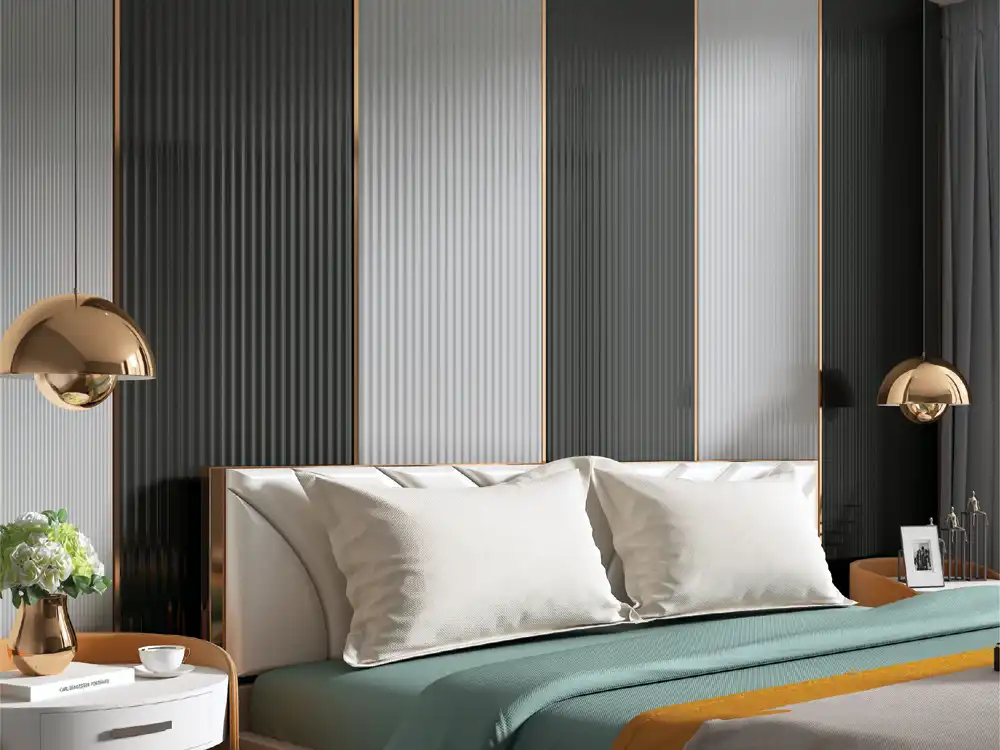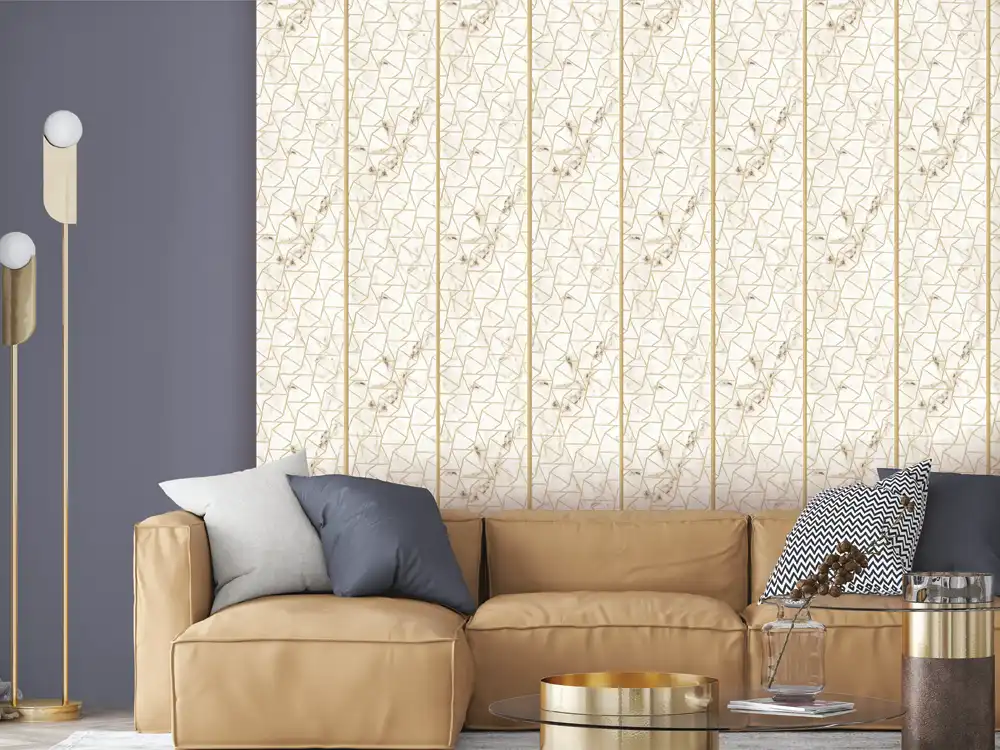
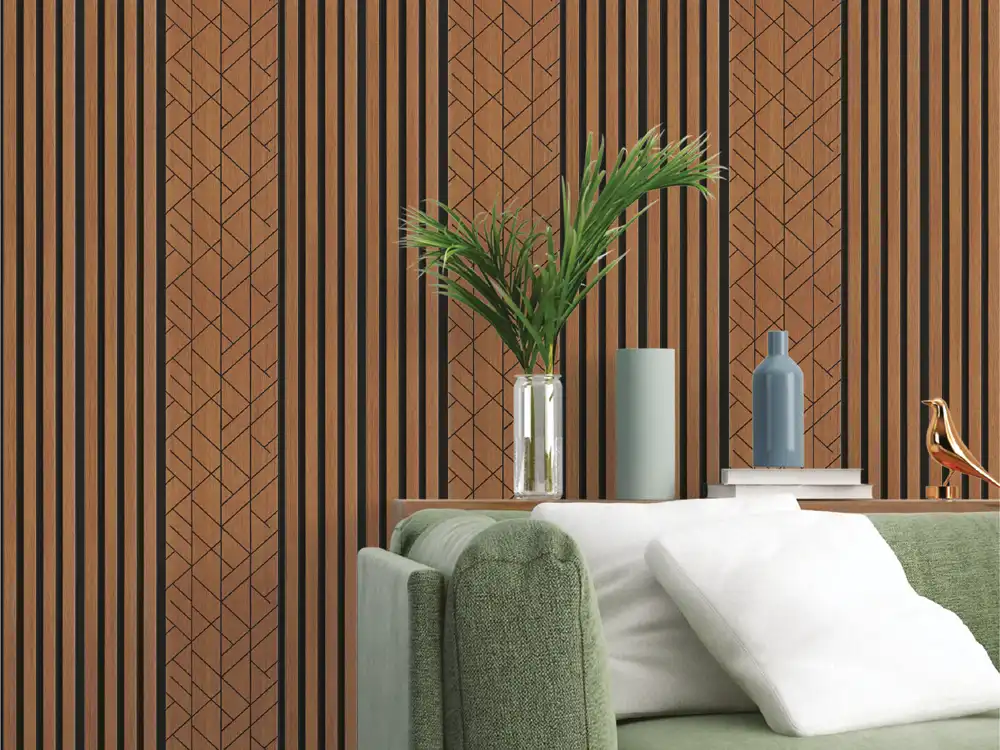
A luxury-design editorial on louver feature walls, showing how proportion, negative space, material restraint, lighting, furniture and detailing create a premium living room.
Luxury is often confused with “more”: more materials, more lighting, more texture, more gold, more wall coverage. In practice, premium interiors usually feel expensive because the composition is controlled. A successful louver design for luxury living room spaces uses repetition and shadow with restraint rather than turning every surface into a feature.
Think of louvers as architecture, not decoration. The Mark Decor Louvers category and a refined 30 CM Louvera collection provide surface options, but proportion and detailing create the luxury effect.
Premium begins with a wall that knows its role
Decide whether the louver feature is framing the television, anchoring a sofa, creating an entry sequence or connecting two materials. A wall without a role collects unnecessary objects because nobody knows what should dominate.
Once the role is clear, remove anything that does not support it.
Negative space is a luxury material
A louver field surrounded by plain wall often feels more deliberate than texture from corner to corner. The unpanelled area creates a border, gives the eye rest and increases the perceived importance of the feature.
Do not be afraid of blank wall. In a premium room, empty space can be part of the composition.
Choose one dominant direction
Vertical louvers emphasise height and form a strong repeated rhythm. Horizontal layouts emphasise width. Mixing both on the same focal wall requires a very clear concept and can easily feel overdesigned.
Let one direction lead, then allow furniture and lighting to introduce the counter-lines.
Use colour depth instead of excessive contrast
Luxury palettes often work through subtle tonal relationships: warm brown against soft beige, charcoal against greige, or a dark wood-inspired louver beside muted stone. High contrast can be dramatic, but drama is not the only route to premium design.
Compare samples under real lighting to see undertones, especially when several neutrals are used together.
Let the profile scale match the room scale
A broad double-height room can carry a stronger repeated profile than a compact apartment. In a large living area, very fine lines may disappear from the main viewing distance. In a small room, the same pattern can become visually busy.
Luxury comes from the right scale, not from choosing the most complex profile.
Furniture should align with the feature, not float in front of it
A console, TV, fireplace element or low cabinet establishes horizontal lines. Align the louver field to meaningful furniture edges where possible. If the feature is intentionally asymmetrical, make the alignment visible.
The wall and furniture should look like one elevation developed together.
One adjacent premium material is often enough
Louvers can pair beautifully with stone, metal, mirror or a smooth panel, but using all four on the same wall rarely improves sophistication. Choose one supporting material and give it a clear job.
For example, a smooth stone-look centre can calm the television while louvers provide texture at the sides. Or a slim metal detail can define the edge without becoming a second major feature.
Lighting should reveal the wall, not announce itself
Grazing light can deepen louver shadows, but excessive strips and spotlights can make a premium wall look theatrical. Use lighting to reveal texture gradually.
Warm ambient light often supports wood-inspired finishes, while more neutral light may suit grey or contemporary palettes. The exact lighting should serve the entire room, not only the photograph.
Hide the practical complexity before you celebrate the surface
Luxury detailing depends on clean cable routes, planned switch positions, screen support and access. A beautiful louver wall loses its effect if wires, adapters or random service panels appear after installation.
Coordinate all wall-mounted elements before the decorative finish is closed.
Resolve corners as carefully as the centre
A premium feature is judged at its endings. Decide whether louvers stop against a plain wall, return around a corner, meet a metal trim or terminate with an end panel. Narrow leftover strips and unfinished edges immediately reduce the quality of the composition.
Ask to see or draw the detail before installation.
Use art sparingly on a textured backdrop
A large artwork can coexist with louvers, but small scattered frames often fight the repeated pattern. If art is important, create a smooth zone or choose one significant piece.
A living room needs hierarchy: wall texture, art and furniture should not all demand equal attention.
The ceiling should echo the room, not copy the wall
If the living room has a decorative ceiling, keep the relationship subtle. Repeating the exact louver treatment overhead can become overwhelming unless the architecture specifically calls for it.
A simple ceiling with well-positioned lighting can make a premium wall feel stronger.
Luxury means consistency beyond the hero wall
The focal louver finish should relate to doors, flooring, soft furnishings or furniture elsewhere, even if it is not repeated literally. A room feels expensive when the palette continues through small connections.
Use the 30 CM Louvera collection to compare warm, dark and neutral possibilities against the complete room palette.
Do not design only for the camera angle
Social-media inspiration often shows one perfect front view. Real living rooms are experienced from the entrance, sofa, dining area and circulation path. Check the feature from all these positions.
A premium wall should remain balanced when viewed obliquely, not only in a centred photograph.
A luxury editing exercise
List every material and decorative element planned for the feature wall. Now remove one. Then ask whether another can become quieter. If the concept improves, the original design was relying on quantity rather than hierarchy.
Restraint is not minimalism; it is prioritisation.
Spend the visual budget where the eye naturally lands
A luxury living room does not need the most expensive treatment on every wall. Put the strongest material and detailing where people first look or spend the most time—the main TV composition, a carefully framed sofa backdrop or the arrival view. Secondary walls can remain painted or quietly finished. Concentrating attention makes the hero louver feature feel more intentional and keeps the overall material palette controlled.
Carry the idea into the room through small echoes
Luxury continuity can come from repeating a tone in a side table, door, cushion or metal accent rather than duplicating the louver wall. These smaller references connect the composition without turning the room into a matched set. The goal is relationship, not repetition.
FAQs
Which louver colours look luxurious in living rooms?
Warm wood-inspired tones, deep browns, charcoal and refined neutrals can all feel premium. The best choice depends on room light, flooring, furniture and adjacent materials.
Should a luxury louver wall cover the full wall?
Not necessarily. Framed, offset or partial applications can feel more deliberate because negative space increases visual hierarchy.
Can louvers be combined with marble or stone-look surfaces?
Yes. Keep one material dominant and plan the transition carefully so the composition does not become overloaded.
What makes a louver wall look cheap?
Poor proportion, too many competing materials, unresolved edges, visible service clutter and excessive lighting can all weaken the result regardless of product price.
Premium design is what remains after unnecessary elements are removed
A refined louver design for luxury living room interiors depends on scale, restraint and detail. Let the louvers create rhythm, give them space, coordinate furniture and lighting, and make every edge intentional.
Explore Mark Decor’s Louvers range and a suitable 30 CM Louvera collection. For a premium feature-wall concept, contact Mark Decor with your wall dimensions and room palette.