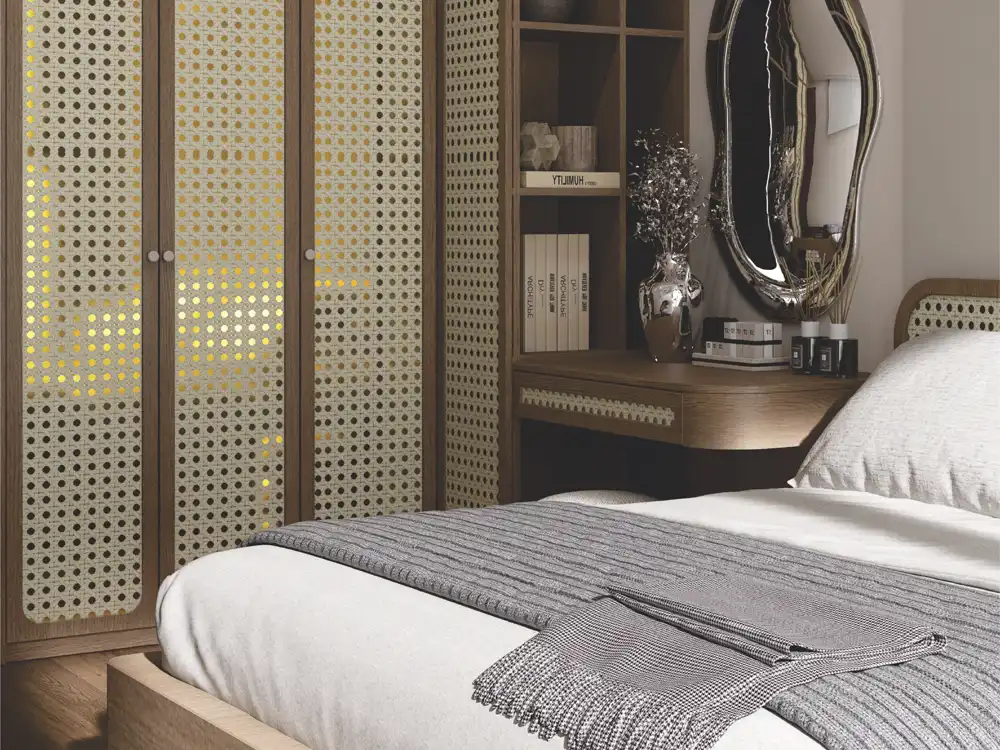
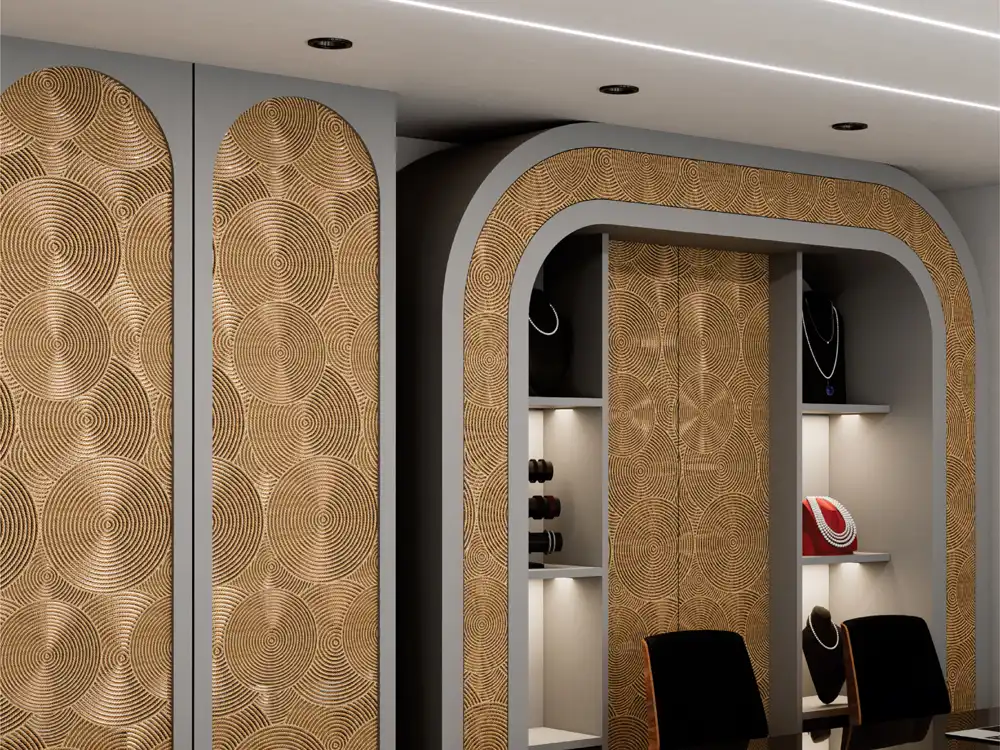
Practical guide to decorative wall panel manufacturer covering quality, selection, samples, documentation, supply and project buying considerations.
decorative wall panel manufacturer is a search that usually comes from a buyer already comparing products, manufacturers or project options. This guide uses practical selection criteria instead of unsupported rankings or generic marketing claims.
Explore relevant Mark Decor product routes such as Graffito Soft Panels, Liquid Metal Panels and Mirror Art. Use current product pages and physical samples as the final reference for collection availability, dimensions and finishes.
Start with the design brief
Define whether the wall must create texture, reflection, curvature, rhythm or a branded visual effect.
Test the decision against the real wall, room scale and adjoining materials rather than an isolated product photograph. Furniture, flooring, paint, stone, lighting and ceiling height can all change how the surface is perceived.
Exact dimensions and sample identification
Every approved sample should map to a current collection and product code.
Compare more than one piece under the lighting in which the material will actually be seen. A showroom sample viewed flat on a table can look different once repeated vertically across a complete wall.
Pattern scale
Large motifs can dominate small walls; fine textures may disappear in large lobbies. Review at real viewing distance.
Test the decision against the real wall, room scale and adjoining materials rather than an isolated product photograph. Furniture, flooring, paint, stone, lighting and ceiling height can all change how the surface is perceived.
Light and shadow
Three-dimensional and metallic surfaces can change dramatically under grazing light.
Test the decision against the real wall, room scale and adjoining materials rather than an isolated product photograph. Furniture, flooring, paint, stone, lighting and ceiling height can all change how the surface is perceived.
Corners and transitions
Draw how the panel meets skirting, ceilings, doors, stone, mirrors and furniture.
Test the decision against the real wall, room scale and adjoining materials rather than an isolated product photograph. Furniture, flooring, paint, stone, lighting and ceiling height can all change how the surface is perceived.
Project quantity
Complex patterns may require extra cutting allowance and sensible spare material.
For larger orders, keep the approved product code, quantity calculation, delivery notes and photographs together. This helps dealers, designers, contractors and the site team stay aligned when work is delivered in phases.
Manufacturer versus installer scope
Product information and site workmanship are different responsibilities and should be clearly assigned.
Test the decision against the real wall, room scale and adjoining materials rather than an isolated product photograph. Furniture, flooring, paint, stone, lighting and ceiling height can all change how the surface is perceived.
Build a mock-up
A representative mock-up confirms joints, colour, lighting and adjacent finishes before full installation.
Test the decision against the real wall, room scale and adjoining materials rather than an isolated product photograph. Furniture, flooring, paint, stone, lighting and ceiling height can all change how the surface is perceived.
How Mark Decor fits into the selection process
For current products, move from this guide to Graffito Soft Panels, Liquid Metal Panels and Mirror Art. Related Mark Decor guides can help buyers understand the category before requesting samples or quotations.
Related reading: Wall Mouldings and Wall Panels for Commercial Interiors.
Before you place an order
- Confirm the exact collection and product code.
- Review a current physical sample.
- Measure the actual wall or application area.
- Plan corners, edges, cut-outs and transitions before installation.
- Calculate quantity with a realistic cutting allowance.
- Confirm availability, packing and delivery details.
- Use only product-specific verified performance claims.
Turn the design concept into measurable information
Architects often begin with a mood image, but procurement needs measurable information. Translate the concept into a wall elevation, approximate pattern scale, target colour family, surface character, and required dimensions. Note whether the wall contains curves, corners, openings, or integrated furniture. This gives the manufacturer or supplier a useful basis for recommending samples. It also makes substitutions easier to evaluate later because the team can compare them against defined requirements rather than against an image that may not show the actual material.
Use material boards, not isolated swatches
A decorative panel should be reviewed beside the finishes it will meet. Put the panel sample on a board with flooring, paint, stone, timber, metal hardware, fabric, or laminate samples from the same room. This exposes undertone conflicts and helps the designer control the number of competing textures. It is especially helpful with metallic, mirror, and deeply textured panels because those surfaces pick up colours and reflections from the surrounding environment more strongly than a flat neutral wall.
Design the lighting and panel together
Decorative wall panels are often selected because they create depth, but that depth only becomes visible under suitable lighting. Ask the lighting designer where grazing light, spotlights, wall washers, or pendant spill will fall. Test the panel from the main viewing position. A strong texture under side light may be desirable in a reception but distracting behind a television. Lighting should therefore be reviewed before the final product is ordered, not after installation when the panel behaviour is already fixed.
Specify tolerance through a mock-up
Words such as neat, aligned, or premium are open to interpretation. A mock-up gives the contractor a physical quality reference. It can show acceptable joint width, pattern orientation, corner treatment, termination, and paint or sealant detail where relevant. Photograph the approved mock-up and identify the product code. On larger projects, this reference is useful during installation and snagging because everyone can compare the work against the same visual standard rather than relying on memory.
Plan maintenance access and long-term use
A hotel corridor, retail environment, office reception, and private bedroom do not receive the same contact or cleaning. Consider how close furniture, trolleys, chairs, or people will come to the panel. Ask how the selected surface should be cleaned and whether damaged pieces can be replaced individually. Maintenance considerations may change the location of a delicate or highly reflective design. Good decorative selection balances immediate visual impact with the way the wall will actually be used.
Keep specification language product-specific
Avoid writing a broad specification that says only ‘decorative wall panel’. State the collection, product code, finish, relevant dimensions, orientation, and sample approval reference. If alternatives are allowed, require them to match defined visual and practical criteria and to be approved through a physical sample. This protects the design intent without turning the specification into an unsupported brand claim. It also helps purchasing teams compare alternatives in a structured way.
Practical decision record
Before finalising a decision around decorative wall panel manufacturer, write down the selected collection, exact code, sample approval date, relevant dimensions, quantity basis, installation contact, delivery requirement and any important limitation discussed with the supplier. This short record is useful because interior-surface decisions often pass through several people between selection and installation. Keeping the information together reduces assumptions and gives the project team a clear reference if the order is revised later.
Frequently Asked Questions
What should architects request?
Current codes, dimensions, physical samples, application guidance and supply information.
Why is a mock-up important?
It shows how joints, lighting and pattern scale work together.
Should every panel be specified the same way?
No. Different materials require product-specific details.
Conclusion
Choosing around decorative wall panel manufacturer is easier when the comparison is based on product identity, consistency, samples, documentation and supply support. A strong manufacturer or brand relationship should reduce uncertainty from selection through delivery.