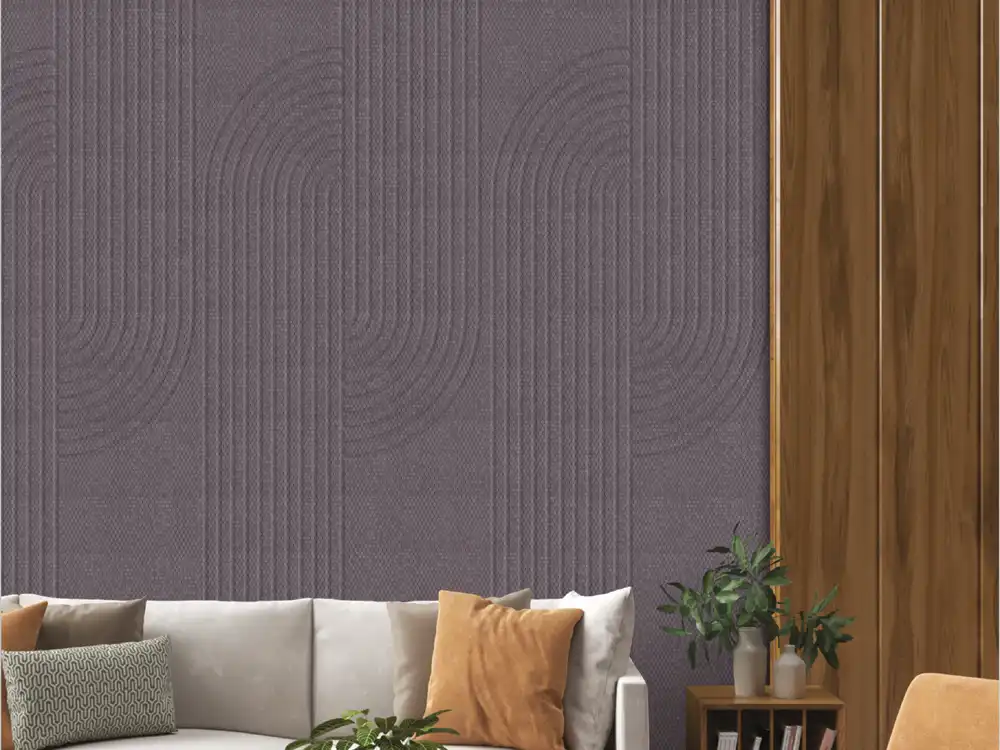
A high-level factory journey explaining how decorative wall panels move through design definition, material preparation, surface creation, sizing, inspection, coding and packing.
Finished decorative panels arrive in a showroom looking simple: a controlled surface, consistent dimensions and a code that identifies the design. Behind that object is a sequence of design, material and quality decisions. Understanding the wall panel production process helps buyers ask better questions without assuming every panel is manufactured in exactly the same way.
This is a high-level factory journey, not a proprietary technical recipe. Different product families use different constructions and equipment. Use the Mark Decor Fresco Panels category and a current Fresco Panels collection as finished examples whose exact specifications should be confirmed separately.
Factory station one: define the visual brief
Production begins with design intent: colour family, texture, groove language, pattern, intended room character and how the surface should coordinate with other materials.
Development may use physical references, digital artwork and repeated prototypes before a product receives a final commercial code.
Factory station two: define the product construction
The manufacturer determines the build-up appropriate to that product family. Similar-looking panels can use different bases, surface layers or forming methods.
Buyers should not infer internal construction or technical performance only from a front photograph.
Factory station three: prepare the base for repeatability
Before decorative finishing, the base needs controlled dimensions and surface condition suitable for the intended process. Preparation quality influences later consistency.
The exact method varies, but the production objective is a predictable starting surface for each piece.
Factory station four: create or apply the decorative surface
Colour, print, film, coating, texture or another treatment gives the panel its visible identity. For wood-inspired and patterned looks, alignment and repeat character are important.
This stage should be understood as controlled surface manufacturing, not simply an afterthought placed on a generic board.
Factory station five: form texture or profile geometry
Where the product relies on grooves, fluting or relief, geometry creates the shadow pattern the buyer eventually sees on the wall.
Consistent profile dimensions help installers create predictable repeated rhythm across multiple pieces.
Factory station six: control sizing and edge condition
Finished pieces need consistent dimensions for setting-out and quantity planning. Edges are cut or prepared according to the system and intended installation.
Current dimensions should still be verified before project drawings because different ranges can use different modules.
Factory station seven: inspect the visible face
Quality inspection may review colour, contamination, scratches, surface defects, texture or other product-specific criteria. Decorative products require visual control because appearance is one of their main functions.
Inspection lighting should reveal rather than hide issues.
Factory station eight: verify identity and representative dimensions
Inspection is not only cosmetic. Code control and dimensions matter because the wrong finish packed perfectly is still the wrong product.
Stable identity also supports samples, quotations and repeat supply later.
Factory station nine: separate accepted and questionable material
A disciplined workflow segregates finished material from pieces awaiting recheck or rejection. Mixing status makes traceability difficult.
For project orders, segregation by customer or code can also reduce later picking errors.
Factory station ten: attach traceable references
Labels, pack markings or internal records connect finished material to the commercial product code. The exact labelling system varies by manufacturer.
The buyer-facing outcome should be consistent identity from sample through invoice and dispatch.
Factory station eleven: design packing around handling risk
Decorative panels need protection against face damage, edge impact, bending or other risks relevant to their geometry. Packing also needs to be practical for warehouse and site movement.
The wall-panel packing and dispatch guide explains how this continues after production.
Factory station twelve: store finished packs without undoing QC
Poor warehouse handling can damage a product after it has passed inspection. Finished material should remain organised and protected according to its needs.
Orderly storage also makes picking easier and reduces unnecessary movement of unrelated packs.
Factory station thirteen: reconnect the physical product with the customer order
At order-picking stage, warehouse teams match code and quantity to the commercial document. Mixed-code orders need deliberate separation.
This is where stable product identity proves its value outside the factory line.
Factory station fourteen: use project feedback as process information
Recurring field issues can reveal opportunities to improve labels, packing, instructions or product design. Large projects are especially informative because repeated applications expose patterns that one small job may not show.
Manufacturing quality improves when useful information travels backward as well as forward.
Factory station fifteen: documentation makes production commercially repeatable
Catalogues, sample labels, product codes and current specifications translate factory output into information that designers and dealers can actually use.
Without documentation, even consistent production becomes difficult to specify or reorder accurately.
A buyer can audit process without asking for trade secrets
Ask outcome questions: How are codes controlled? How is finished appearance checked? How is questionable material separated? How are packs identified?
These questions reveal production discipline without requiring confidential formulations, machinery settings or proprietary process details.
A factory visit should follow material flow
Observe how material moves from preparation to finished inspection, segregation, packing and storage. Look for clean status changes and readable identity.
Do not judge capability only by building size or machine count.
Factory station sixteen: packing approval closes the manufacturing loop
Before finished material becomes a dispatch item, the packing method should match product dimensions and normal handling risk. The goal is not simply to make the pack look neat; it is to preserve the surface, edges and identity that earlier production stages worked to control.
Factory station seventeen: batch records support traceability
Depending on the manufacturer’s system, internal production or inventory records may help trace when and how material moved through the factory. Buyers do not necessarily need access to proprietary records, but a disciplined traceability culture helps when a project question must be investigated later.
Factory station eighteen: final order release turns stock into a shipment
Once material is accepted, coded and packed, the final commercial release should reconnect the physical packs with the correct customer, destination and quantity. This last control is where production discipline meets logistics. A strong process prevents a correct product from being sent to the wrong project or mixed with another order.
FAQs
Are all decorative wall panels manufactured the same way?
No. Construction, surface treatment and forming methods vary by product family. Confirm the specification of the exact product.
What should buyers look for in a factory visit?
Look for stable coding, controlled material flow, finished-surface inspection, segregation, packing and clear order handling.
Does the production process prove fire or acoustic performance?
No. Technical performance should be supported by documentation for the exact product or tested assembly.
Why are product codes so important?
They connect design, samples, production, inventory, quotation, dispatch and future repeat supply.
A finished panel is the result of many controlled handoffs
The wall panel production process is best understood as a chain: design, material preparation, surface creation, profile control, inspection, identity and packing. Buyers do not need every factory secret, but they benefit from knowing whether those handoffs are disciplined. Explore Mark Decor’s Fresco Panels range and a relevant Fresco Panels collection, then contact Mark Decor for current product information.
Related reading: Wall Panel Packing & Dispatch: What Good Suppliers Do Before Delivery Wall Panel Quantity Planning: How to Estimate Pieces, Cuts & Wastage Finishing Decorative Wall Panel Edges: Corners, Returns & Transitions