Understand when a bendable laminate can reduce visible edge banding, how the furniture edge is prepared, and where seamless detailing adds value.
Searches for a laminate without edge banding usually begin with a visual problem: the face of a cabinet looks beautiful, but the edge shows a line, a colour difference or a dark core. Edge banding itself is not a defect. It is a well-established method used on millions of high-quality furniture products. The concern arises when the design intends a continuous, monolithic appearance and the separate edge treatment interrupts that effect.
Bendable decorative surfaces such as Thermolam provide another construction option. By forming the same laminate around a prepared edge, the fabricator may reduce or eliminate a separately visible edge strip on that side. The result can look cleaner, but it requires much more than choosing a flexible sheet. The board profile, adhesive, bend radius, direction and workmanship determine whether the edge actually appears seamless.
What is edge banding?
Edge banding is a narrow strip applied to the exposed edge of plywood, MDF, particle board or another panel. It protects the core, improves appearance and can coordinate with the face finish. Common edge materials include PVC, ABS, veneer, acrylic and matching laminate strips. Industrial edge-banding machines can apply these materials quickly and consistently.
A separate edge creates a junction. Even when face and edge colours are close, light reflects differently from the two surfaces. A glue line, thickness difference or dark substrate line may be visible at close range. In many designs this is acceptable or intentionally highlighted. In a minimal solid-colour kitchen or wardrobe, the designer may prefer the face décor to flow around the corner.
How can laminate continue around an edge?
A conventional rigid laminate is mainly intended for flat application and may crack if forced around a tight corner. A bendable laminate is engineered to accommodate a controlled change in direction. The furniture board is machined with the required edge profile or groove, creating space for the surface to form without excessive stress. The laminate is positioned, bonded and pressed around the edge using the product’s approved method.
The outer corner usually has a small radius rather than a mathematically sharp point. That radius is important: it affects appearance, touch and stress on the sheet. The correct size depends on the selected product. Trying to create a tighter fold than recommended may cause whitening, cracking or lifting.
Does “without edge banding” mean no edge protection?
No. The visible front-to-side transition may use the continuous laminate, but every panel still has multiple edges and terminations. The top, bottom, rear or hinge-side edge may require another finish. The substrate must remain protected from moisture and impact. A successful design decides where the laminate wraps, where it ends and how every remaining edge is sealed.
It is more accurate to describe the result as without a separately visible edge band on the wrapped edge. This wording avoids the false impression that the board can be left raw elsewhere.
Where a seamless edge creates the most value
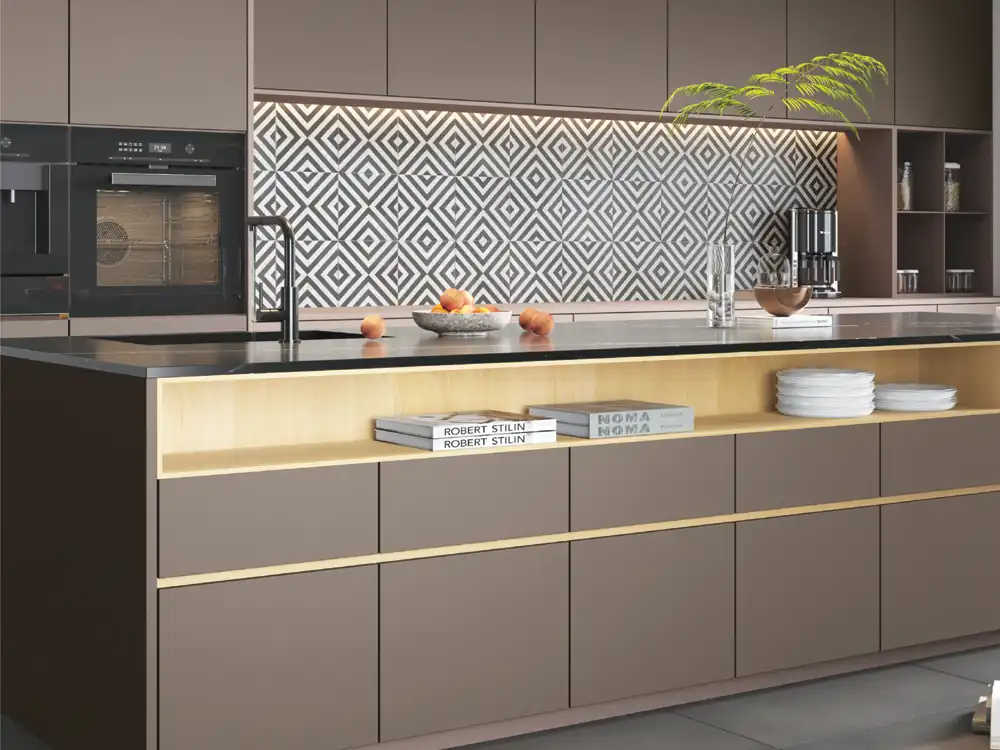
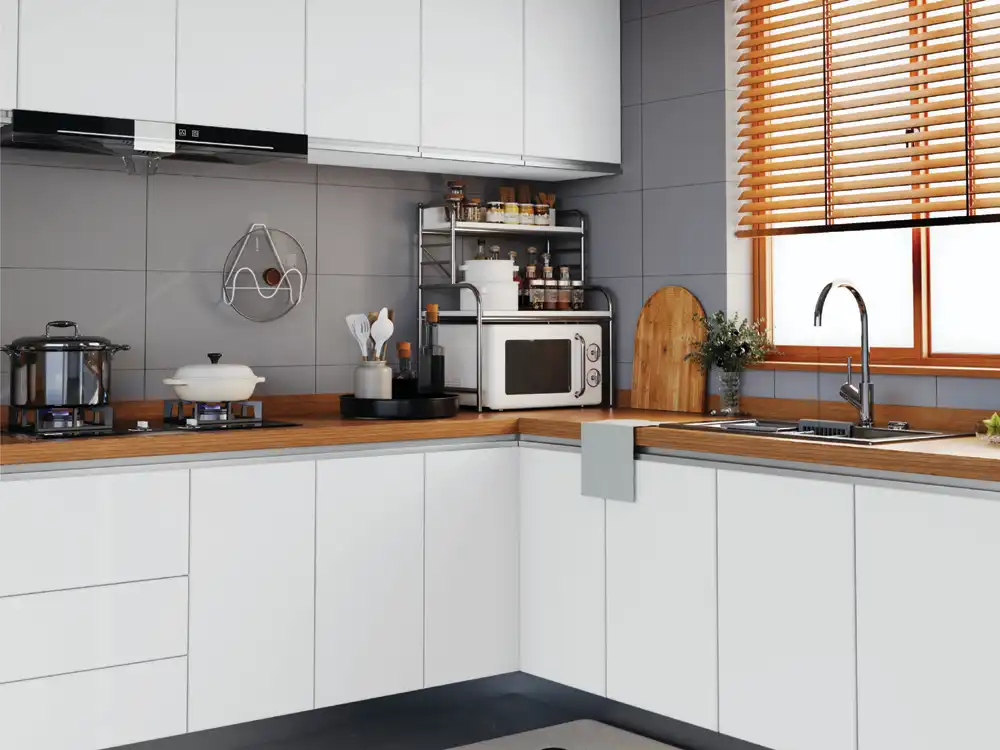
Kitchen shutters: Repeated cabinet fronts benefit from colour continuity, especially in handleless layouts. Tall-unit and island edges are particularly visible.
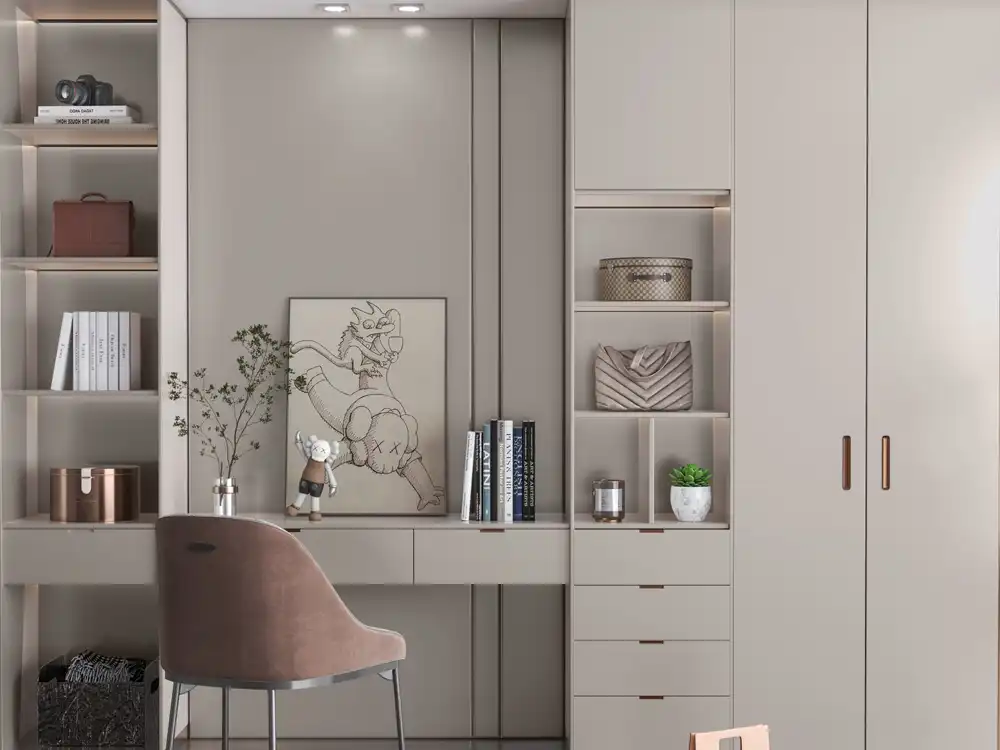
Wardrobes: Long shutter edges can make a large elevation look outlined. A wrapped finish can create a quieter wall of storage.
Drawer fronts: Drawers are touched and viewed closely. A smooth top or side transition can improve the tactile experience.
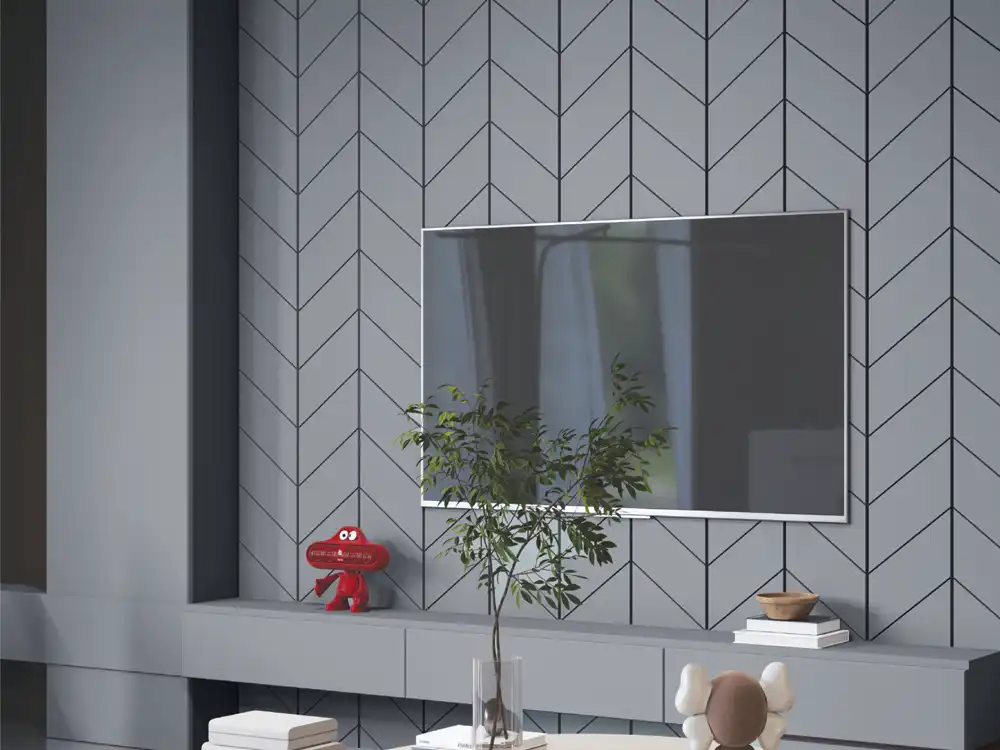
TV consoles and study desks: Open edges and rounded returns can appear more furniture-like when the décor continues.
Retail counters and reception desks: Customer-facing corners are exposed from several angles, making edge quality part of the brand impression.
Advantages of a continuous laminate edge
- The face colour and texture continue around the selected corner.
- A separate visible edge strip and its colour-matching challenge may be avoided.
- The furniture form becomes more prominent than its construction line.
- Solid colours can achieve a clean, modern appearance.
- Rounded or softened details can be explored with a compatible system.
- Designers can coordinate a family of shutters, drawers and custom furniture.
Limitations and practical considerations
A wrapped laminate edge is not automatically cheaper. Although one edge material may be removed, the workshop may need specialised machining, careful handling and slower production. The complete installed cost should include labour, rejects, sample development and quality control.
Repair can also differ. A damaged edge band can sometimes be replaced locally. If a continuous surface is severely damaged, the repair may involve a larger portion of the shutter. Discuss expected use, impact risk and after-sales capability before selecting the detail for a highly trafficked commercial location.
Not every décor behaves identically. Pattern direction, thickness and surface finish can influence the appearance of the bend. Claims such as scratch resistance, heat resistance or waterproof performance should be checked against the exact technical document.
Edge banding versus bendable laminate
Choose conventional edge banding when: production speed is critical; the workshop has a high-quality automated edge process; the edge is hidden or intentionally contrasted; local replacement is important; or the product geometry does not require a wrap.
Consider a bendable laminate when: the edge is prominent; same-colour continuity is central to the concept; the design uses softened corners; the fabricator has suitable equipment and experience; and a tested sample confirms the result.
Many successful projects combine both methods. Thermolam may wrap the opening edge of premium shutters while hidden and internal edges use conventional bands. This is often more sensible than applying the most complex detail everywhere.
What a good seamless edge should look like
The radius should be uniform along the full length. The surface should remain smooth without bubbles, cracks, white stress marks or visible adhesive. Grain and texture should follow the intended direction. The face should remain flat, and the wrapped edge should not make the shutter oversize or interfere with hardware.
Inspect the sample under side lighting because shadows reveal waviness. Run a hand gently along the corner to feel irregularities. View multiple shutters together to ensure their radii and colour orientation match.
Workshop quality-control process
- Verify sheet batch, design code and quantity before cutting.
- Condition the board and surface materials in a suitable environment.
- Machine a test piece and measure the groove or profile.
- Dry-fit the décor and mark grain direction.
- Use the approved adhesive and controlled application time.
- Apply even pressure through the bend and curing period.
- Trim with sharp tools and protect the finished corner.
- Record the successful settings for batch consistency.
Questions homeowners should ask
Ask to see a completed corner, not only a flat sample. Confirm which exact edges will be wrapped. Request the name of the substrate, adhesive and surface design. Ask how the remaining edges are sealed and how a damaged shutter would be repaired. Ensure the quote describes the construction rather than using “seamless” as an undefined sales term.
Care of a wrapped edge
Use a soft cloth and suitable mild cleaner. Avoid striking the corner with metal utensils, chairs or vacuum-cleaner heads. Adjust hinges and drawer channels if two fronts begin rubbing. Keep water away from unsealed joints and repair plumbing leaks quickly. These simple practices protect both the decorative surface and the underlying board.
Conclusion
A laminate without a separately visible edge band can create a sophisticated, continuous furniture detail. Thermolam and other bendable surfaces make this possible on selected 90-degree edges, but the result depends on tested fabrication. Edge banding remains a valuable method; the choice should follow the visual objective, geometry, budget and workshop capability.
See AASA Thermolam options and ask for a fabricated sample in the décor you are considering. Mark Decor’s catalogues and project team can support material selection and specification discussions.