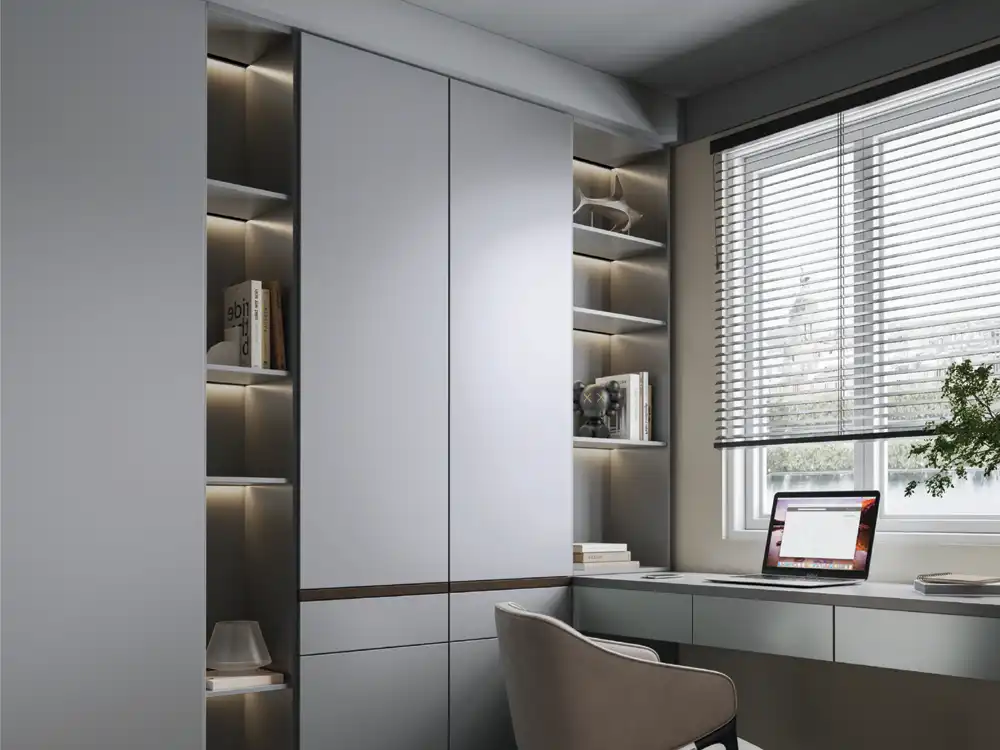
Compare Thermolam and acrylic laminate by appearance, edge detailing, gloss, fabrication, applications, care and the overall interior design objective.
Thermolam and acrylic are both associated with premium contemporary furniture, yet they solve different design problems. Acrylic surfaces are often selected for their depth, clarity and high-gloss or refined matt appearance. Thermolam is selected when bendability and continuity around a prepared furniture edge are priorities. A useful Thermolam vs acrylic laminate comparison must therefore look beyond colour and price.
The best choice depends on the interior mood, the geometry of the shutter, the desired edge detail, workshop capability and maintenance expectations. Kitchens and wardrobes may even use both materials in a coordinated scheme. This guide explains the practical differences without treating either option as universally better.
Understanding acrylic furniture surfaces
Acrylic decorative sheets or acrylic-faced panels are known for a smooth, visually deep surface. High-gloss acrylic can create strong reflections and saturated colour, while super-matt acrylic systems can produce a soft, sophisticated look. They are commonly used on kitchen shutters, wardrobes, TV units and premium cabinetry.
Acrylic surfaces are generally applied to flat boards or supplied as finished panels, depending on the system. Exposed edges are often finished with matching acrylic or compatible edge bands. The quality of colour matching, glue line and edge polishing contributes significantly to the final result.
Understanding Thermolam
Thermolam is a decorative laminate intended for applications where a controlled bend around an edge can create a continuous finish. The same décor may travel from the front of a shutter to its side, reducing a separately visible edge line. It is especially relevant to slab furniture, rounded details and minimal colour planes.
Exact characteristics vary by product. Designers must confirm approved substrates, radius, adhesives and performance claims for the selected AASA Thermolam décor.
Visual character: depth versus continuity
Acrylic’s strongest visual quality is often surface depth. Gloss acrylic reflects light and can make colours appear rich and luminous. It suits dramatic kitchens, display units and wardrobes where a polished, high-impact face is desired. Matt acrylic can look quieter while retaining a very smooth, precise feel.
Thermolam’s strongest visual quality is continuity. Instead of making the face alone the hero, it emphasises the way the surface turns the corner. Solid colours, muted tones and textures can create a wrapped furniture effect. The surface may be less reflective than high-gloss acrylic, but the edge can appear more integrated.
Edge detailing
Most acrylic shutter systems use a separate edge solution. High-quality matching edges can look excellent, but a thin junction may remain visible. Some designers use contrasting edges deliberately, especially with dark frames or metallic details.
Thermolam can be formed around a compatible prepared edge, allowing the face décor to continue. This is useful when the design brief specifically calls for a seamless or edge-band-free appearance on that side. It does not mean every edge of the panel is automatically wrapped or that no joints exist elsewhere.
Kitchen applications
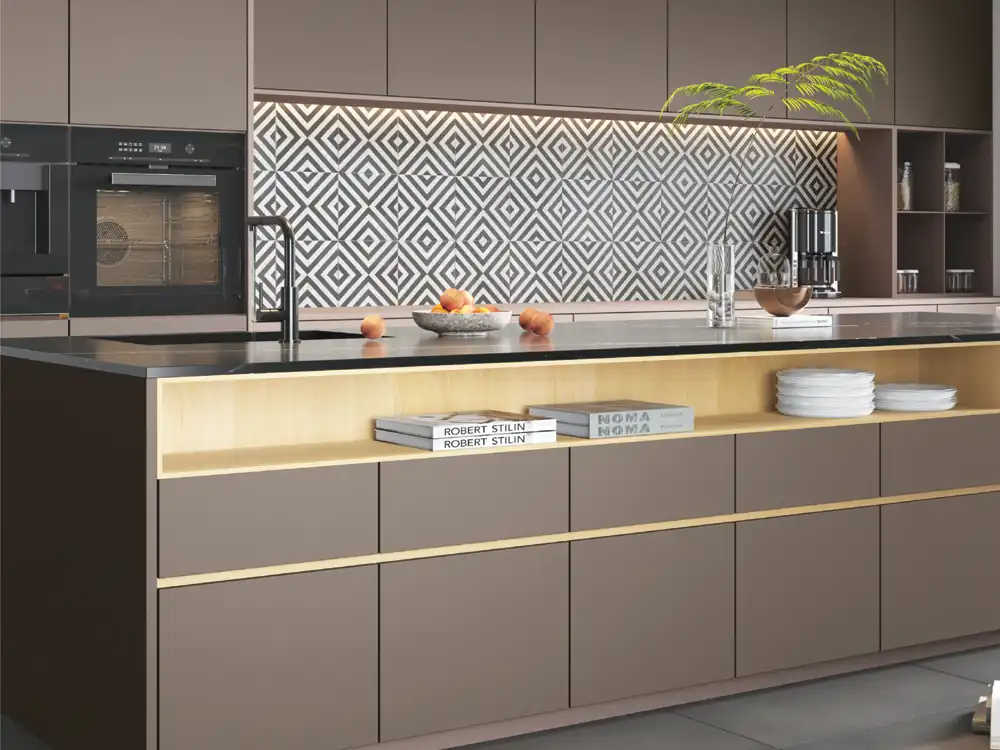
Acrylic kitchens suit clients who want bright gloss, mirror-like reflections, sharp colour blocks or a highly polished modern appearance. They can be effective on overhead shutters, islands and tall units. Reflections also reveal waviness, so substrate flatness and application quality are essential.
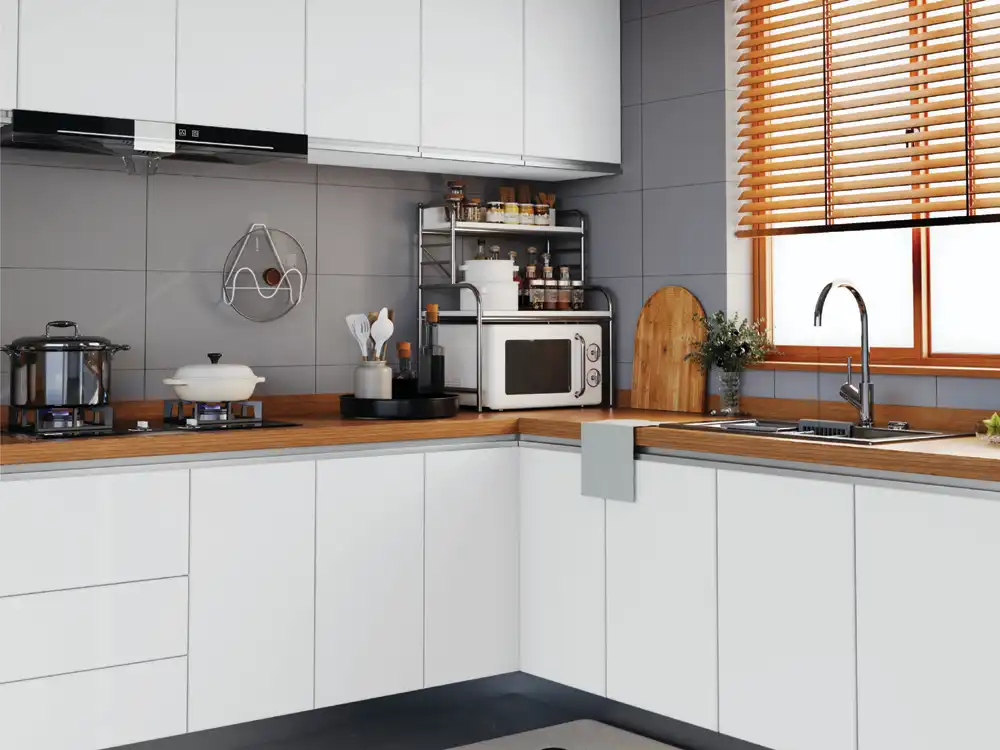
Thermolam kitchens suit clients who value calm surfaces, softened corners and same-colour edges. They can work well on handleless shutters, drawer fronts and island details. Their selection must still consider water, appliance clearances and the approved product performance.
A mixed scheme can use acrylic on a feature bank and Thermolam on surrounding cabinetry. For example, a glossy acrylic island may sit within warm neutral Thermolam tall units, or a matt acrylic overhead band may contrast with wrapped wood-tone base units.
Wardrobe applications
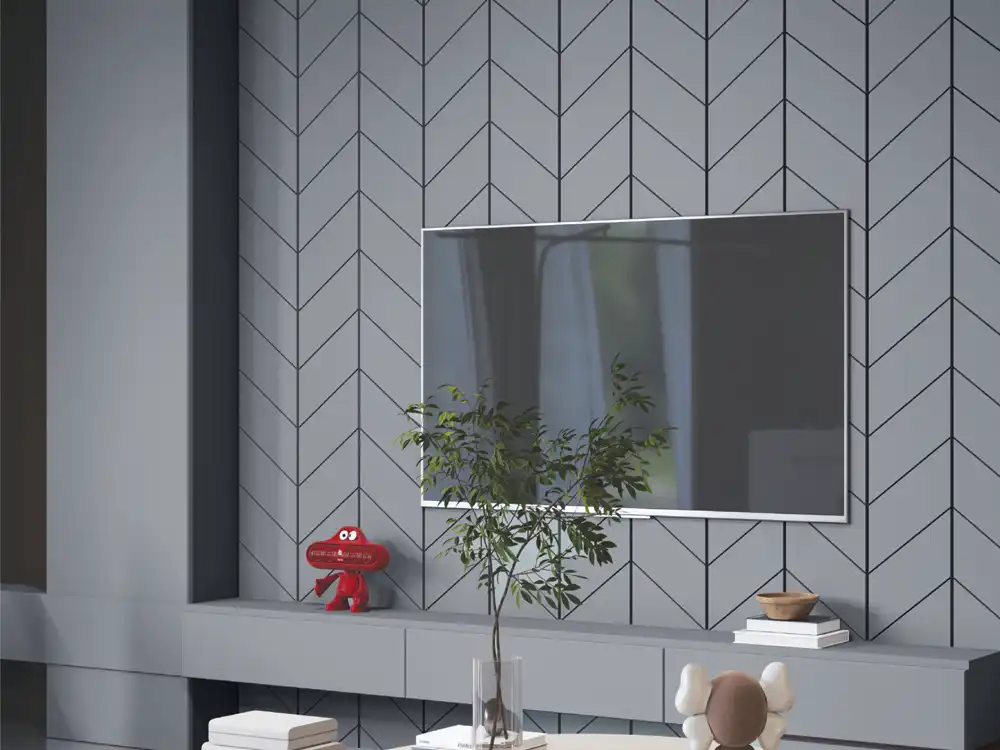
Acrylic wardrobes can create a sleek statement wall, particularly in gloss white, grey or deep colours. They pair well with glass, mirrors and metal profiles. Because a large glossy surface reflects the room, lighting and door alignment need careful control.
Thermolam wardrobes emphasise the long vertical edge and can make repeated shutters appear less outlined. Solid, earthy and wood designs support calm bedroom palettes. A continuous edge can feel especially refined on handleless or long-handle shutters.
Touch and everyday appearance
Gloss acrylic is visually striking but may show fingerprints, dust and fine marks depending on colour and coating. Matt acrylic may reduce reflection but should still be tested for touch marks. Thermolam finishes vary, so the same sample test is necessary. Dark, uniform surfaces generally reveal handling more than patterned or mid-tone surfaces.
Ask for physical samples large enough to touch and clean. Make a fingerprint, wipe it with the recommended method and view the result under side lighting. This simple test is more useful than relying on broad labels such as anti-fingerprint.
Fabrication and workshop capability
Acrylic requires careful flat bonding, dust control, protective-film handling, cutting and edge finishing. Poor handling can create scratches, bubbles or edge mismatch. Some systems are best processed in a factory environment with specialised machinery.
Thermolam requires accurate edge or groove machining and controlled forming. The operator must avoid cracking, stress marks and uneven radius. A workshop experienced with acrylic is not automatically experienced with bendable laminates, and the reverse is also true.
Choose based on proven capability. Ask each fabricator to show completed work and produce a sample with the actual substrate, décor and hardware.
Durability and technical claims
Neither material category can be judged by a single universal durability statement. Acrylic products differ in coating, thickness and construction. Thermolam products differ in finish and specification. Scratch, stain, moisture and heat performance should be verified from the current technical data.
In both cases, the underlying board and edge sealing are critical. A premium face material cannot prevent swelling caused by water entering an unsealed joint. Proper hinge adjustment, safe cleaning and appliance spacing protect the installation.
Maintenance
Use a clean soft microfibre cloth and a cleaner approved by the supplier. Abrasive pads can dull gloss and mark matt surfaces. Remove grit before wiping because trapped particles can create fine scratches. Avoid aggressive solvents and test any unfamiliar cleaner in a hidden area.
Protect shutter corners during installation and move-in. Most early damage occurs when tools, countertop pieces or appliances strike newly installed furniture, not during normal gentle use.
Budget and value
Compare the total shutter price rather than the face-sheet rate. Acrylic may include a matching premium edge, protective handling and factory pressing. Thermolam may include specialised grooving and forming. Hardware, substrate and finishing labour can outweigh the difference between two sheet prices.
Value should be measured against the desired outcome. Paying for high-gloss depth when the room is designed in a soft natural style may add little. Paying for a wrapped edge on a hidden cabinet may also add little. Concentrate the premium material where its unique quality is visible.
Which should you choose?
- Choose acrylic when surface depth, gloss, colour brilliance or an ultra-smooth face is the main objective.
- Choose Thermolam when a bendable same-décor edge and continuous furniture form are the main objective.
- Choose a combination when the room needs one reflective focal point and quieter surrounding cabinetry.
- Choose neither solely from a photograph; approve physical samples and a fabricated corner.
Questions for your design meeting
- Should the furniture reflect light or absorb it?
- Is the face finish or the edge continuity more important?
- Which edges are visible from the room entrance?
- Does the workshop have proven experience with the chosen system?
- How will the surface be cleaned in daily use?
- What other materials must coordinate with it?
- What replacement or repair strategy is available?
Conclusion
Thermolam and acrylic laminate represent two distinct premium surface directions. Acrylic celebrates the face through gloss, depth or precision. Thermolam celebrates the transition from face to edge through controlled bendability. The better option is the one that serves the architecture of the furniture and can be executed consistently.
Compare AASA Thermolam with Mark Decor’s acrylic collection using real samples under your project lighting. Download current catalogues or contact Mark Decor for selection support.