Compare Thermolam and regular decorative laminate for flat surfaces, curved edges, kitchens, wardrobes, fabrication, budget and long-term use.
When planning furniture, the word “laminate” can refer to several surface families with different constructions and capabilities. Two products may appear similar in a small sample but behave very differently when cut, bonded or formed. A common question is therefore Thermolam vs regular laminate: which one should be selected for a kitchen, wardrobe, TV unit or commercial interior?
The answer is not that one is universally superior. Regular decorative laminate is an established, versatile solution for flat surfaces. Thermolam is considered when greater bending flexibility and a continuous finish around selected edges are important. The best specification depends on the furniture geometry, desired visual detail, fabricator skill, budget and technical requirements.
What is regular decorative laminate?
Regular decorative laminate is a surface sheet designed primarily for bonding to flat boards. It is widely used on plywood, MDF, particle board and other suitable substrates. It comes in solid colours, woodgrains, stones, abstracts, metals and many textures. Depending on the category and specification, it can be used on shutters, panels, tables, counters, wall elements and internal furniture components.
Exposed board edges are usually finished separately with an edge band, laminate strip, veneer, solid lipping or another detail. This construction is familiar to most workshops and can be produced efficiently with standard machinery.
What is Thermolam?
Thermolam is a decorative surface concept associated with controlled bendability around furniture edges. The same décor can move from a flat face around a prepared 90-degree corner, supporting a more continuous appearance. It is often searched as thermo laminate, bendable laminate sheet or seamless-edge laminate.
Its performance depends on the specific product and approved method. Bendability should not be interpreted as unlimited flexibility. Sheet thickness, bending direction, radius, groove preparation, adhesive and pressure must follow the current guidance for the selected collection.
Main difference: flat application versus edge forming
The clearest difference is geometry. Regular laminate is most comfortable on flat planes and broad, gentle forms approved for that product. Thermolam is selected when a tighter controlled edge transition is part of the design. This can reduce the need for a separately visible edge band on the wrapped side.
If the entire project consists of flat shelves and hidden edges, Thermolam may offer little additional value. If the project includes prominent shutter edges, rounded counters or continuous colour around a corner, its forming capability may become important.
Appearance and design language
Regular laminate offers enormous visual variety. A skilled fabricator can achieve excellent matching edges, deliberate contrast or fine joint details. It is suitable for traditional, contemporary and experimental interiors.
Thermolam emphasises surface continuity. It works especially well in minimal designs where the form should appear as a single wrapped element. Solid colours and restrained textures highlight this effect. Wood designs can also be effective when grain direction is carefully planned.
The choice is therefore not simply about the décor printed on the sheet. It is about how the décor resolves at the corner.
Application comparison
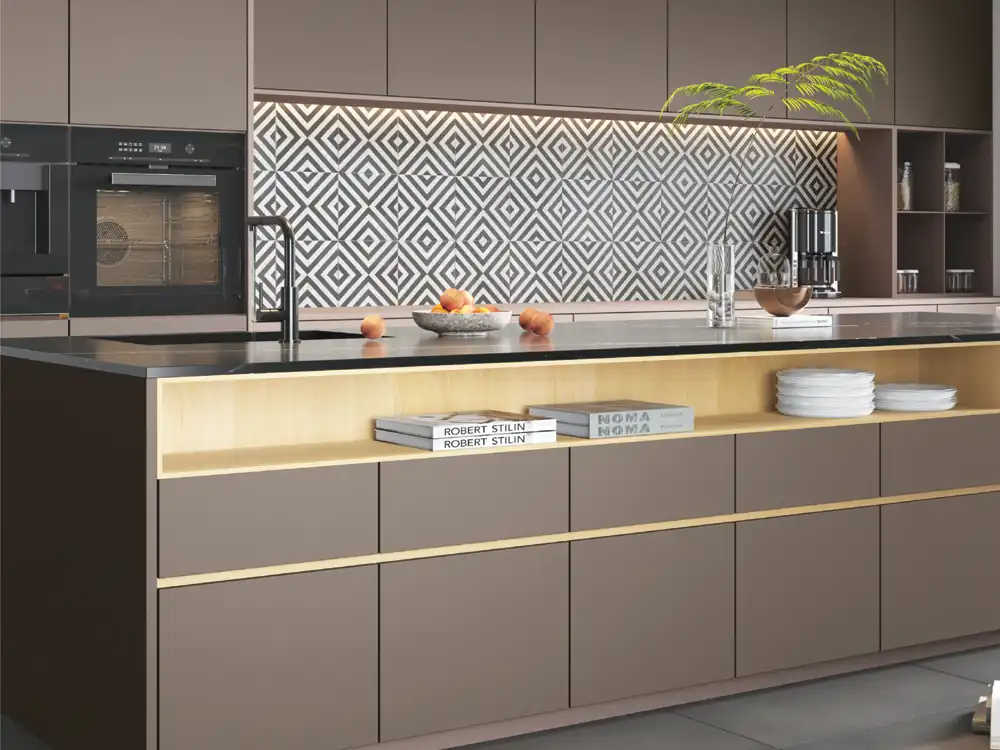
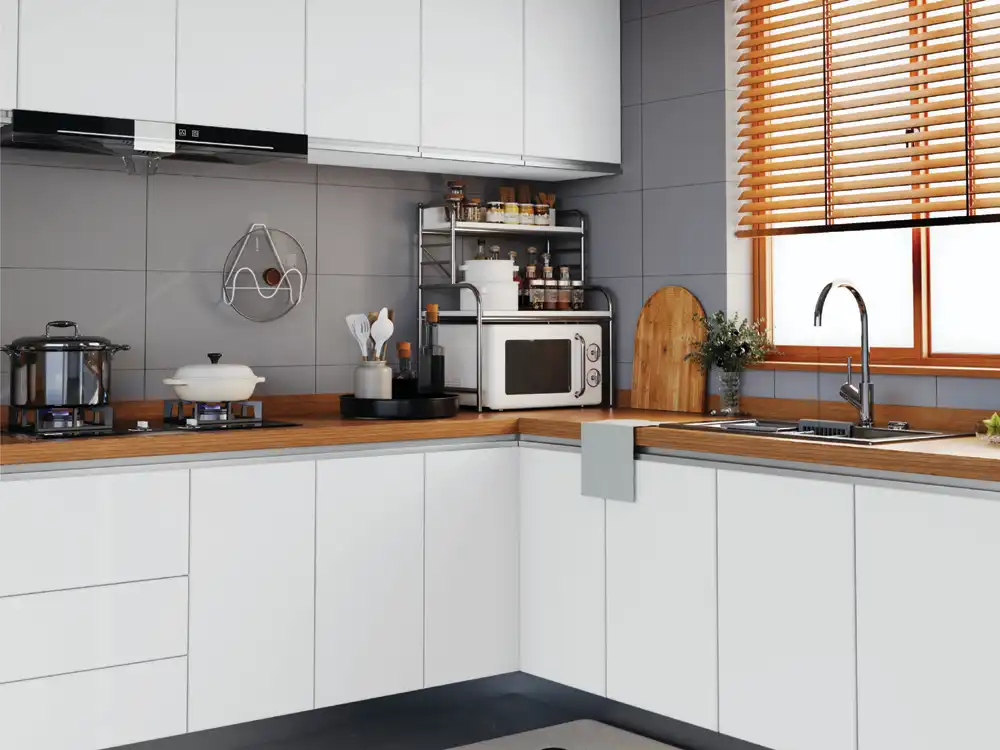
Kitchen shutters: Regular laminate is a dependable choice for flat shutters with matching edge bands. Thermolam may be used where selected opening edges, island drawers or tall units need a continuous finish.
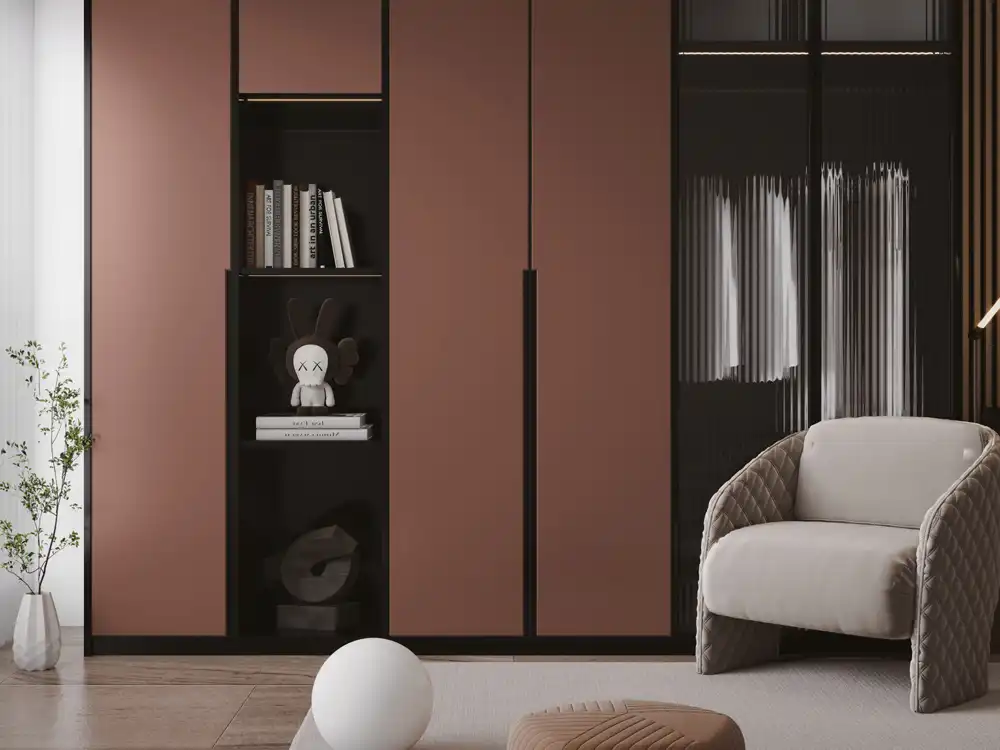
Wardrobes: Both products can create attractive elevations. Thermolam can reduce the outlined appearance of repeated long edges in a minimal full-height wardrobe.
Internal cabinetry: Regular laminate is usually efficient for shelves, partitions and internal surfaces where bending is not required.
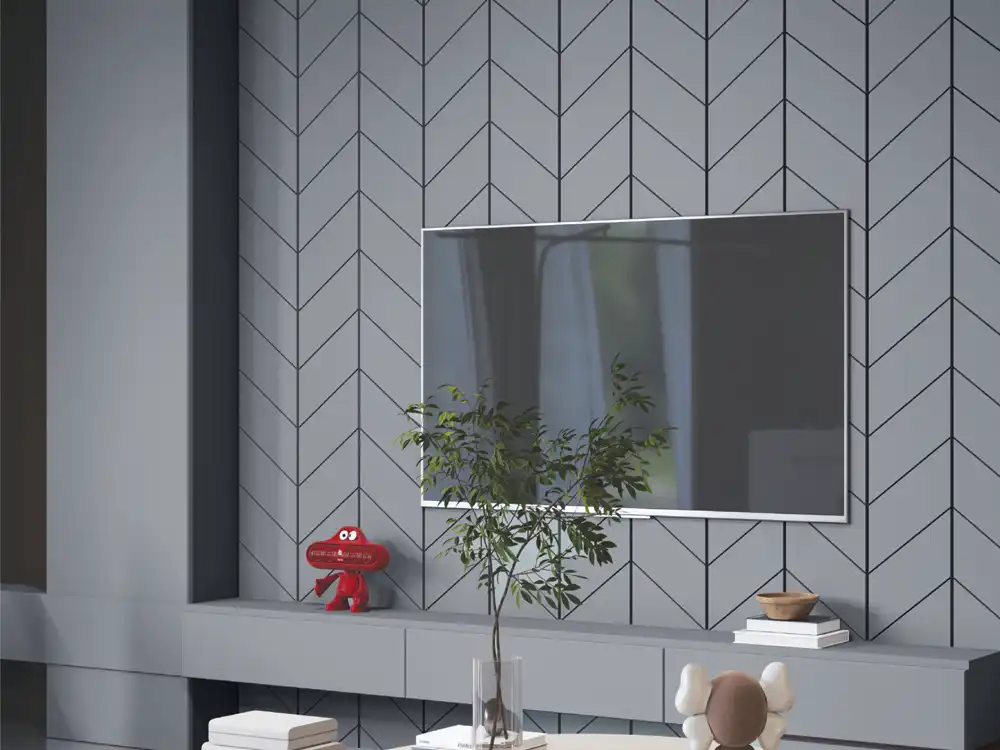
TV units and custom furniture: Thermolam can add value to exposed rounded returns and console edges. Regular laminate remains practical for broad flat panels.
Commercial counters: The decision depends on the shape, impact exposure and repair strategy. A continuous edge may look premium, while a replaceable edge band may be practical in high-use areas.
Fabrication requirements
Regular laminate application is familiar to a wide network of carpenters and factories. The board is cut, adhesive is applied, the sheet is pressed and edges are trimmed. Separate edge banding may be applied manually or by machine. Quality still depends on flatness, adhesive coverage and trimming skill.
Thermolam adds an edge-forming operation. The substrate geometry must be machined consistently, and the sheet needs controlled handling around the bend. Workshops may require a V-groove or another manufacturer-approved method. A trial piece is essential because small setting changes can affect the radius and surface appearance.
Cost comparison
Material price alone does not determine installed cost. Regular laminate may use a separate edge material and edge-banding labour, but production can be fast and predictable. Thermolam may reduce a separately visible strip on one edge while increasing machining, testing and skilled labour.
Project scale matters. A factory producing hundreds of identical shutters can optimise either system. A small custom project may have more setup cost per piece. Ask for a quote based on the complete shutter construction, including substrate, adhesive, edge method, hardware cut-outs and finishing.
Durability and maintenance
Durability cannot be decided by category name alone. It depends on the exact surface, substrate, adhesive, edge sealing, use conditions and installation. Regular laminate and Thermolam collections may have different test results and limitations. Confirm official data for abrasion, scratch, stain, moisture or heat performance instead of relying on broad market descriptions.
Both surfaces benefit from soft-cloth cleaning, prompt spill removal and protection from sharp impact. Water entering an unsealed board joint can cause damage regardless of the decorative face. Hardware should remain aligned so shutters do not rub.
Repair and replacement
A conventional edge band may be replaceable without resurfacing the entire face, depending on the damage. A continuous wrapped surface offers fewer visual joints but can require a larger repair if the corner is severely damaged. This trade-off matters for hotels, schools, retail stores and other high-traffic interiors.
For residential kitchens and wardrobes, good fabrication and normal care can reduce the issue. Keep the product code and production details on record so a matching replacement can be discussed later.
Selection table in plain language
- Choose regular laminate for economical flat applications, large décor variety, familiar production and easily coordinated edge details.
- Choose Thermolam when a selected edge must carry the same décor continuously and the workshop can execute the approved bend.
- Use both when premium visible shutters need continuity but internal or hidden panels do not require specialised forming.
Questions to resolve with the designer
- Which edges are visible from normal viewing positions?
- Is the edge line meant to disappear or become a contrast detail?
- Does the furniture include a tight radius or only flat panels?
- Can the fabricator show a successful sample using the chosen product?
- What is the expected exposure to water, heat and impact?
- How important are local repair and future replacement?
- What is the complete installed budget?
Common misconceptions
“Thermolam replaces all laminates.” It does not. Regular decorative laminate remains appropriate for a vast range of applications.
“Regular laminate always looks cheaper.” False. High-quality design and fabrication can produce excellent regular-laminate furniture.
“Bendable means unbreakable.” No surface is immune to incorrect machining, excessive radius, impact or poor bonding.
“One specification applies to every brand.” Product instructions vary. Use the current technical document for the exact design.
Conclusion
The Thermolam vs regular laminate decision is fundamentally a choice between two detailing strategies. Regular laminate excels on flat surfaces with a separately resolved edge. Thermolam adds the possibility of carrying the décor around a prepared corner. Neither should be selected by trend alone.
Start with the furniture drawing, identify the most visible edges and ask the workshop to build a sample. Explore AASA Thermolam and the wider Mark Decor surface range through the catalogue section, or contact the team for guidance.