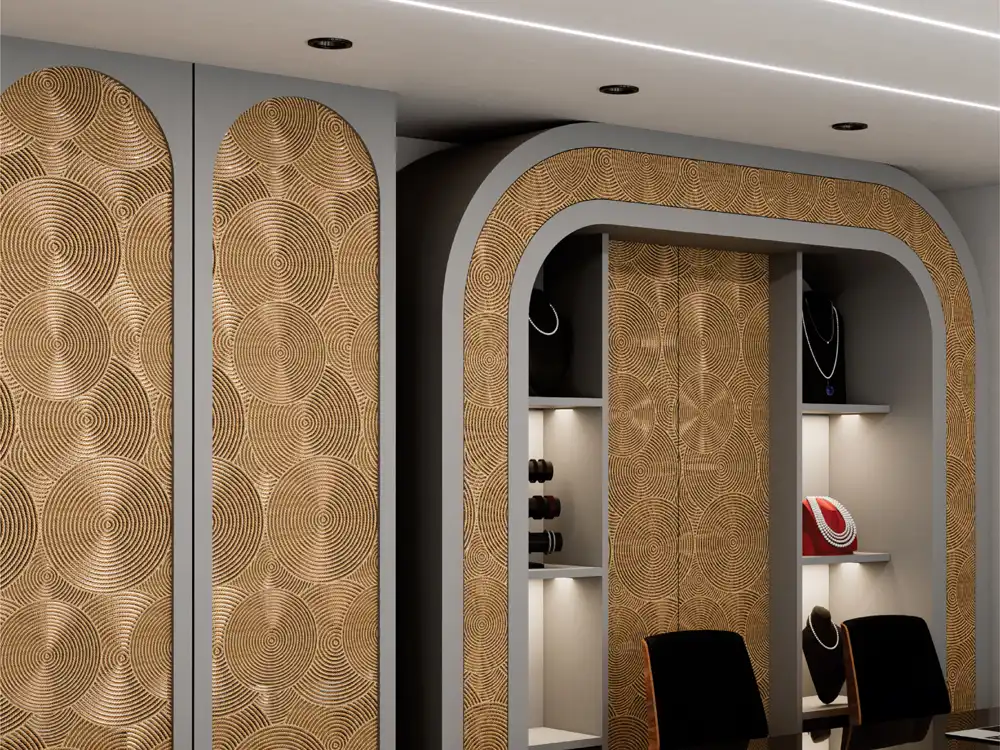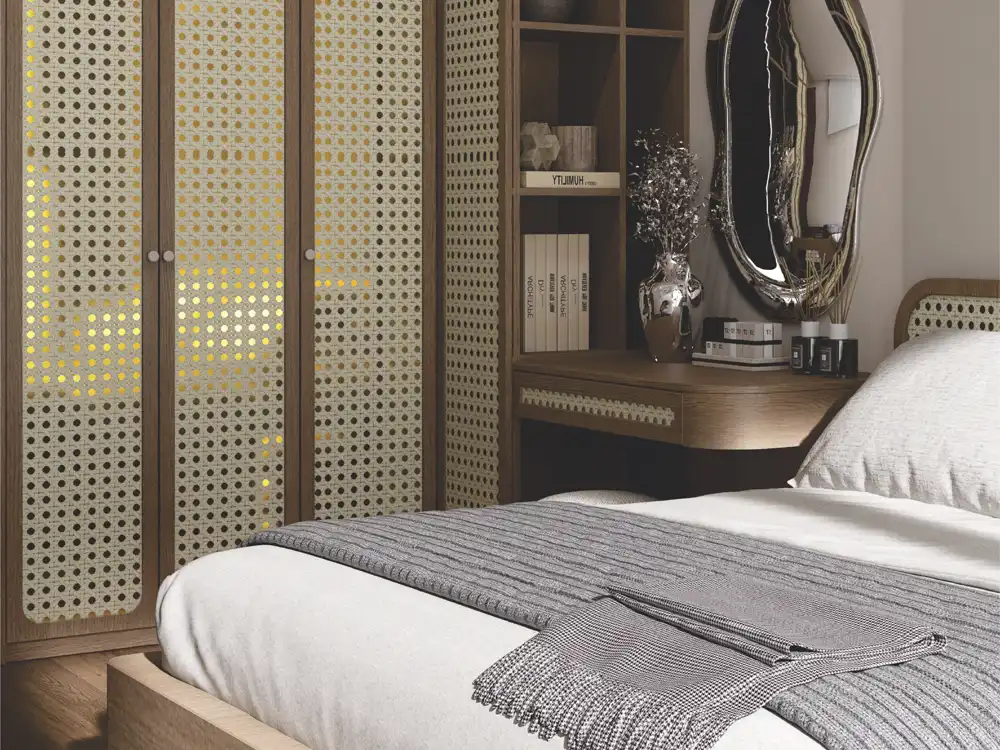

Practical guide to wall panel quality covering quality, selection, samples, documentation, supply and project buying considerations.
wall panel quality is a search that usually comes from a buyer already comparing products, manufacturers or project options. This guide uses practical selection criteria instead of unsupported rankings or generic marketing claims.
Explore relevant Mark Decor product routes such as Graffito Soft Panels, Liquid Metal Panels and Mirror Art. Use current product pages and physical samples as the final reference for collection availability, dimensions and finishes.
Surface quality
Look for uniform colour, consistent sheen and controlled texture.
Compare more than one piece under the lighting in which the material will actually be seen. A showroom sample viewed flat on a table can look different once repeated vertically across a complete wall.
Panel geometry
Straight edges and stable dimensions help create cleaner joints.
Test the decision against the real wall, room scale and adjoining materials rather than an isolated product photograph. Furniture, flooring, paint, stone, lighting and ceiling height can all change how the surface is perceived.
Pattern orientation
Directional designs should be planned before cutting.
Test the decision against the real wall, room scale and adjoining materials rather than an isolated product photograph. Furniture, flooring, paint, stone, lighting and ceiling height can all change how the surface is perceived.
Joint appearance
Dry-fit pieces before the entire wall is installed.
Test the decision against the real wall, room scale and adjoining materials rather than an isolated product photograph. Furniture, flooring, paint, stone, lighting and ceiling height can all change how the surface is perceived.
Corners and terminations
Side edges and transitions determine whether a wall looks resolved.
Test the decision against the real wall, room scale and adjoining materials rather than an isolated product photograph. Furniture, flooring, paint, stone, lighting and ceiling height can all change how the surface is perceived.
Lighting response
Grazing light can exaggerate texture and joint lines.
Test the decision against the real wall, room scale and adjoining materials rather than an isolated product photograph. Furniture, flooring, paint, stone, lighting and ceiling height can all change how the surface is perceived.
Batch consistency
Compare multiple pieces from the delivered quantity.
Compare more than one piece under the lighting in which the material will actually be seen. A showroom sample viewed flat on a table can look different once repeated vertically across a complete wall.
Suitability
Match the product to wall geometry and environment.
Test the decision against the real wall, room scale and adjoining materials rather than an isolated product photograph. Furniture, flooring, paint, stone, lighting and ceiling height can all change how the surface is perceived.
Packing and storage
Protect faces before and during installation.
For larger orders, keep the approved product code, quantity calculation, delivery notes and photographs together. This helps dealers, designers, contractors and the site team stay aligned when work is delivered in phases.
Maintenance expectations
Choose a surface whose cleaning needs fit the room.
Test the decision against the real wall, room scale and adjoining materials rather than an isolated product photograph. Furniture, flooring, paint, stone, lighting and ceiling height can all change how the surface is perceived.
How Mark Decor fits into the selection process
For current products, move from this guide to Graffito Soft Panels, Liquid Metal Panels and Mirror Art. Related Mark Decor guides can help buyers understand the category before requesting samples or quotations.
Related reading: Wall Panel Colour, Texture & Finish and Wall Panel Maintenance Guide.
Before you place an order
- Confirm the exact collection and product code.
- Review a current physical sample.
- Measure the actual wall or application area.
- Plan corners, edges, cut-outs and transitions before installation.
- Calculate quantity with a realistic cutting allowance.
- Confirm availability, packing and delivery details.
- Use only product-specific verified performance claims.
Inspect the panel from three distances
Quality looks different from thirty centimetres, two metres, and across the room. Close inspection reveals edge damage and surface marks. Mid-distance inspection shows joints, texture consistency, and pattern repetition. Long-distance inspection reveals whether the complete wall reads as one intentional composition. Use all three distances when approving a decorative panel, especially if the product has a strong relief, metallic effect, or repeating motif.
Use grazing light to expose joint behaviour
A light placed close to the wall and aimed across the surface can reveal joint steps, waviness, and inconsistent relief that flat lighting may hide. This is useful during mock-up review, but it should also reflect the actual lighting design. If the finished room will use grazing light, quality expectations should account for that condition from the beginning. Otherwise a wall that looked acceptable under construction lighting may behave very differently once the final fixtures are switched on.
Check pattern direction before installers begin
Many decorative panels have a direction even when it is not immediately obvious. Grain, linear texture, highlights, or moulded relief can appear different when a piece is rotated. Mark orientation on drawings or on the back of approved samples if necessary. Decide the direction before cutting. Consistent orientation can make an ordinary installation look deliberate, while random rotation can create visible patches even when every individual panel is technically acceptable.
Review corners as a separate quality item
A clean central field does not guarantee a clean corner. Outside corners, inside corners, returns, and edges beside door frames can require different treatment. Ask for a representative corner in the mock-up if the project has many of them. Check whether the selected detail exposes the panel edge, uses a return, or transitions to another material. Corner planning also affects quantity because small return pieces and cut allowances can add up across a project.
Protect installed work from later trades
Panel quality can be damaged after installation by electricians, furniture installers, painters, or other site activity. Coordinate sequencing so the decorative surface is installed at an appropriate stage and protected until handover. Avoid leaning tools or heavy materials against finished walls. If a protection layer is used, make sure it will not harm the surface. Site protection is part of achieving the intended final quality even though it occurs after the panel leaves the manufacturer.
Create a snagging checklist for the finished wall
At completion, inspect alignment, joints, surface condition, corners, terminations, cut-outs, and consistency from the normal viewing positions. Use the approved mock-up or sample as the reference. Photograph any issue and identify its location before repair work begins. A structured snagging process helps distinguish material issues from installation issues and prevents random touch-ups that can create new visual differences.
Practical decision record
Before finalising a decision around wall panel quality, write down the selected collection, exact code, sample approval date, relevant dimensions, quantity basis, installation contact, delivery requirement and any important limitation discussed with the supplier. This short record is useful because interior-surface decisions often pass through several people between selection and installation. Keeping the information together reduces assumptions and gives the project team a clear reference if the order is revised later.
Frequently Asked Questions
What is the first delivery check?
Verify code, quantity, visible condition, dimensions and finish.
Can lighting exaggerate joints?
Yes, especially strong side lighting.
Why does direction matter?
Directional textures can look inconsistent if rotated.
Conclusion
Choosing around wall panel quality is easier when the comparison is based on product identity, consistency, samples, documentation and supply support. A strong manufacturer or brand relationship should reduce uncertainty from selection through delivery.